Tabla de contenido
- Clasificación básica y usos de los cucharones de excavadora
- Consejos para seleccionar el tamaño y la capacidad del cucharón
- Análisis del material del cucharón y comparación de la resistencia al desgaste
- Factores que afectan el rendimiento del cucharón
- ¿Por qué elegir a GFM como su socio para el suministro de cucharones para excavadoras?
Clasificación básica y usos de los cucharones de excavadora
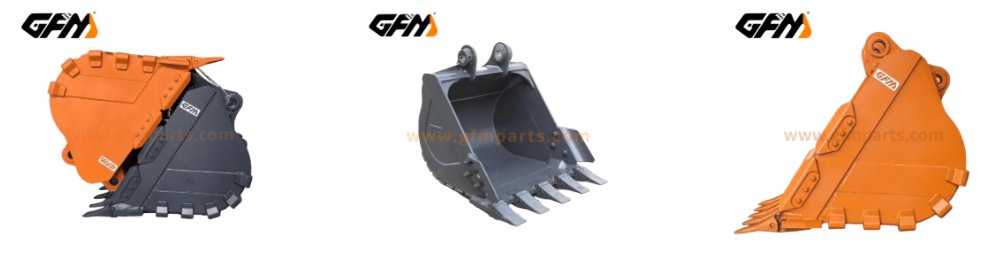
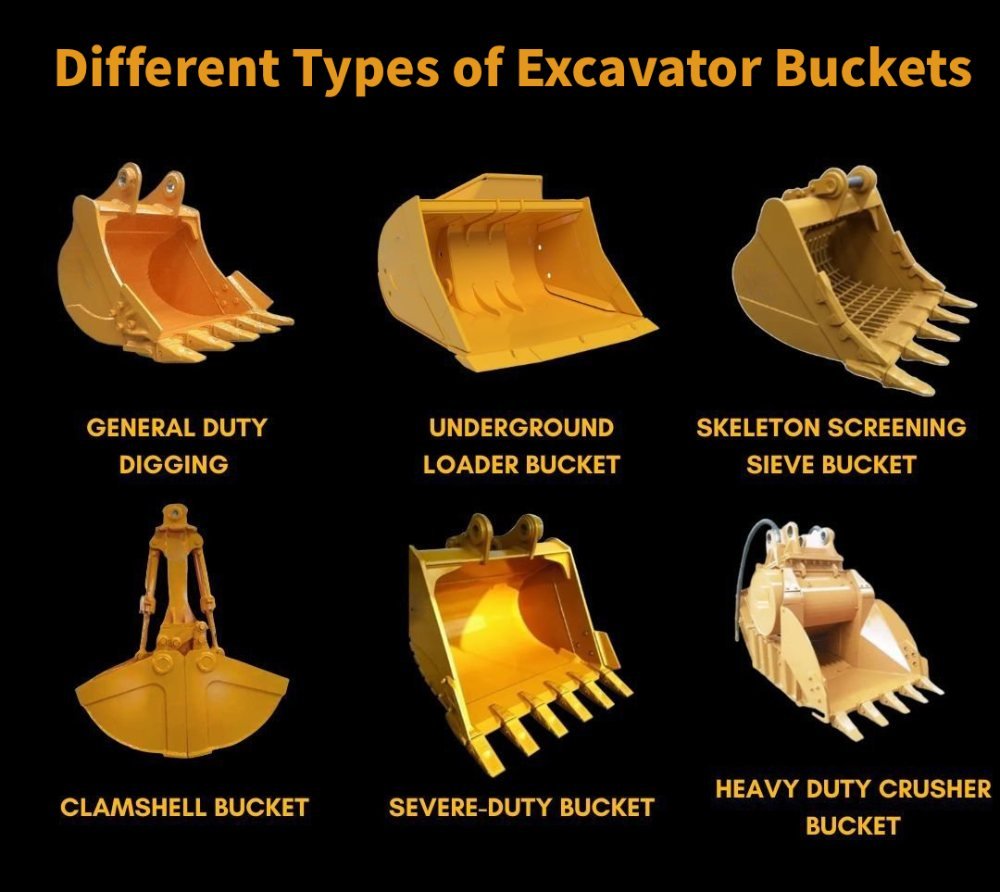
Los cucharones de excavadora son uno de los componentes más críticos en las operaciones de excavadora, y su tipo y uso afectan directamente la eficiencia y los costos de construcción. Según las diferentes necesidades operativas, los cucharones se pueden clasificar principalmente en los siguientes tipos:
- Cubo estándar
- Uso: Adecuado para excavar materiales regulares como tierra y grava.
- Características: Estructura simple, capacidad moderada, adecuada para la mayoría de entornos de construcción.
- Cubo de servicio pesado
- Uso: Se utiliza para operaciones de alta intensidad, como suelos duros, minerales y escombros de construcción.
- Características: Placas de acero engrosadas, fuerte resistencia al impacto, alta durabilidad.
- Cubo de rocas
- Uso: Diseñado específicamente para rocas duras, minerales y piedra triturada.
- Características: Fabricado en acero resistente al desgaste de alta resistencia, equipado con dientes y placas laterales engrosados, capaz de soportar entornos de alto desgaste.
- Cubo ligero
- Uso: Adecuado para suelo suelto, barro o trabajos de excavación fina.
- Características: Ligero, operación flexible, reduce la carga general de la máquina y mejora la movilidad.
Además, el diseño estructural del cucharón, como la altura de la placa lateral, la disposición de los dientes y la distribución de las nervaduras de refuerzo, también influye en su durabilidad y eficiencia de carga. Al elegir el cucharón adecuado, se deben considerar el entorno de construcción, las características del material y el modelo de excavadora para garantizar su eficiencia y durabilidad. Por ejemplo, en operaciones de gravera, se puede seleccionar un cucharón estándar, mientras que en minería de roca dura, se recomienda un cucharón para roca o de servicio pesado para reducir el desgaste y el tiempo de inactividad.
Consejos para seleccionar el tamaño y la capacidad del cucharón
El tamaño del cucharón determina directamente la eficiencia de excavación y la capacidad de carga, por lo que es necesario considerarlo cuidadosamente al comprar o seleccionar un cucharón. Los puntos clave incluyen:
- Adaptación de la capacidad del cucharón a la carga de la máquina
- La capacidad del cucharón generalmente se mide en metros cúbicos (m³) y debe coincidir con la carga nominal de la excavadora.
- Por ejemplo, una excavadora de 20 toneladas admite una cuchara estándar de 1,0 a 1,2 m³, lo que garantiza una carga eficiente por ciclo y evita la sobrecarga del sistema hidráulico y del chasis.
- Análisis de dimensiones
- Ancho del cucharón: afecta la cantidad de material excavado cada vez; demasiado ancho aumenta la resistencia, demasiado estrecho reduce la eficiencia.
- Profundidad y altura del cucharón: afectan la capacidad de carga y el ángulo de excavación.
- Longitud y ángulo de los dientes: Los dientes largos son adecuados para suelos duros y rocas, los dientes cortos son adecuados para materiales sueltos, lo que mejora la estabilidad de la carga.
- Selección del tamaño según las características del material
- Tierra suelta y grava: Los cucharones de mayor capacidad son adecuados para mejorar la eficiencia de carga.
- Residuos de mineral, arcilla o hormigón de alta densidad: se prefieren cucharones ligeramente más pequeños para reducir la resistencia y mejorar la precisión operativa.
- Optimización de la eficiencia operativa
- Al combinar razonablemente la capacidad del cucharón con el diseño de los dientes, se puede aumentar la eficiencia de excavación por ciclo en aproximadamente 10%–15%.
- Una combinación adecuada también reduce el consumo de combustible y el desgaste del equipo, mejorando así la rentabilidad general de la construcción.
Análisis del material del cucharón y comparación de la resistencia al desgaste
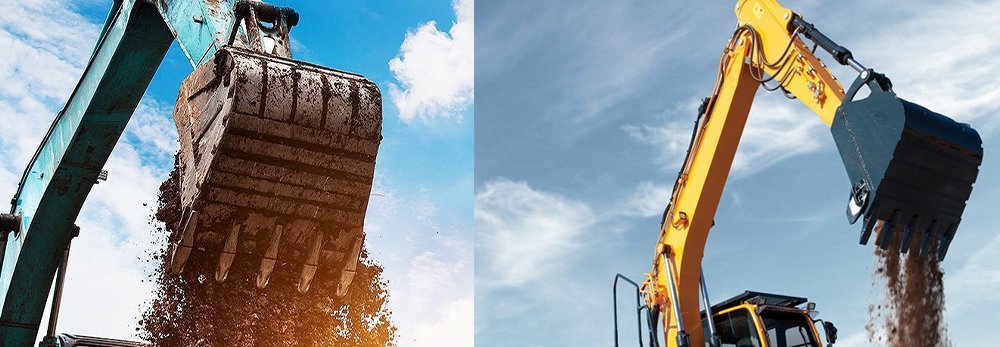
El material del cucharón es un factor clave para determinar su durabilidad y vida útil. Elegir el material adecuado puede reducir significativamente los costos de mantenimiento y mejorar la eficiencia operativa. Los puntos principales son:
- Materiales y características comunes
- Acero de alta resistencia (como acero Q345B, 70#): buena ductilidad, alta resistencia, adecuado para operaciones generales en suelo y grava.
- Acero resistente al desgaste (como NM360, NM400): Alta dureza, alta resistencia al desgaste, apto para minerales, piedra triturada y entornos de alto desgaste. Su vida útil puede ser entre 1,5 y 2 veces mayor que la del acero convencional.
- Materiales compuestos: Combinando acero y aleaciones resistentes al desgaste, garantizando resistencia al tiempo que reduce el peso, adecuado para operaciones precisas y carga eficiente.
- Selección de materiales para diferentes piezas
- Dientes del cucharón: El acero resistente al desgaste o los materiales compuestos son más adecuados para operaciones en rocas duras, lo que prolonga la vida útil.
- Placas laterales y placas inferiores: Los tratamientos engrosados o endurecidos mejoran la resistencia al impacto, reduciendo los riesgos de vibración y deformación de la máquina.
- Datos de comparación de resistencia al desgaste
- Los dientes del cucharón de acero resistente al desgaste NM360 pueden soportar aproximadamente 1000 horas de desgaste en operaciones continuas en roca.
- Los dientes de acero de alta resistencia, en las mismas condiciones, solo pueden durar entre 400 y 500 horas.
- La optimización de los materiales de los dientes y de la placa inferior puede prolongar la vida útil general del cucharón en más de 30%.
- Sugerencias para la selección de materiales
- Tierra suelta y grava: Los cucharones de acero de alta resistencia son suficientes y tienen costos más bajos.
- Suelo duro, mineral y piedra triturada: se recomiendan cucharones de acero o compuestos resistentes al desgaste para prolongar la vida útil y reducir el tiempo de inactividad.
- Entornos de trabajo de alta carga: las placas inferiores engrosadas, las nervaduras de refuerzo y los materiales altamente resistentes al desgaste pueden mejorar la resistencia general al impacto.
Factores que afectan el rendimiento del cucharón
El rendimiento del cucharón se ve afectado no solo por el tamaño y el material, sino también por la estructura de diseño y las condiciones de operación. Comprender estos factores ayuda a los operadores a seleccionar cucharones más adecuados y a planificar las operaciones de forma eficiente. Los factores clave incluyen:
- Diseño de dientes
- Dientes puntiagudos: adecuados para operaciones en suelos duros y rocas, fuerte penetración.
- Dientes anchos: adecuados para suelos sueltos y piedras trituradas, mejorando la estabilidad de carga.
- Dientes compuestos: Equilibrio entre penetración y estabilidad de carga, adecuados para diversas condiciones de trabajo.
- Estructura de la placa lateral y la placa inferior
- Las placas laterales engrosadas y las nervaduras de refuerzo internas mejoran la resistencia a la torsión, reduciendo la deformación del cucharón bajo cargas pesadas.
- Los cucharones de gran capacidad pueden agregar nervaduras de refuerzo a la placa inferior, lo que aumenta la rigidez general y reduce los riesgos de grietas por fatiga.
- Ángulo de excavación y método de operación
- Los diferentes ángulos de excavación afectan el rebote del material y la carga hidráulica, lo que incide en la eficiencia y la durabilidad del cucharón.
- La distribución adecuada de las acciones de carga y descarga reduce el desgaste de los dientes y de la placa inferior, lo que afecta indirectamente el rendimiento.
- Entorno de trabajo y carga
- Los entornos de alto desgaste (como minerales o piedra triturada) aceleran el desgaste de los dientes y de la placa inferior.
- Los materiales de alta densidad y la sobrecarga aumentan el estrés estructural, lo que afecta la vida útil del cucharón y la estabilidad del rendimiento.
- Combinación de materiales y diseño
- La selección del material para los dientes, las placas laterales y las placas inferiores determina directamente la resistencia al desgaste del cucharón y la resistencia al impacto.
- En entornos de alta carga, las placas inferiores engrosadas y las nervaduras de refuerzo dispuestas correctamente mejoran la estabilidad operativa y la resistencia al desgaste.
¿Por qué elegir a GFM como su socio para el suministro de cucharones para excavadoras?
GFM es un fabricante profesional de piezas para excavadoras desde 2011, con más de 15 años de experiencia en fabricación y líneas de producción consolidadas, que ofrecen cucharones y componentes para excavadoras de alta calidad y durabilidad en todo el mundo. Como empresa con amplia experiencia... fabricante de cucharones para excavadorasGFM controla estrictamente cada etapa de la producción de cucharones, desde la selección de la materia prima hasta los procesos de fundición, forjado y tratamiento térmico, garantizando que cada cucharón tenga una excelente resistencia al desgaste y al impacto en entornos de trabajo de alta intensidad.
Los cucharones GFM son compatibles con diversas marcas principales, como Komatsu, Hitachi, Caterpillar, Volvo, Kobelco, Doosan, Hyundai, SANY, Liugong, XCMG, Shantui, etc., y satisfacen diferentes modelos y necesidades de construcción. La empresa cuenta con maquinaria avanzada y equipos de inspección de calidad, capaces de gestionar eficientemente pedidos al por mayor y ofrecer soluciones de cucharones fiables y duraderas.
Las ventajas de elegir GFM incluyen:
- Experiencia profesional en fabricación:14 años enfocados en piezas de tren de rodaje y cucharones, procesos maduros, tecnología confiable.
- Materiales y procesos de alta calidad:Utiliza acero de primera calidad combinado con procesos de fundición, forjado y tratamiento térmico para garantizar que los cucharones sigan siendo duraderos en condiciones de alto desgaste y alto impacto.
- Amplia aplicabilidad:Diseñado para adaptarse a diversas condiciones de trabajo y modelos de excavadoras, garantizando alta eficiencia y estabilidad en diferentes entornos de construcción.
- Entrega eficiente y garantía de inventario:Un sistema integral de producción y almacenamiento garantiza el suministro oportuno de baldes para satisfacer las necesidades de proyectos nacionales e internacionales.
- Compatible con las principales marcas:Amplia compatibilidad con diferentes marcas y modelos de excavadoras, conveniente para reemplazo o actualizaciones.
Con un amplio conocimiento del sector, una rigurosa gestión de calidad y un equipo de atención al cliente profesional, GFM no solo ofrece cucharones de alto rendimiento, sino que también ofrece un soporte estable y eficiente para proyectos de construcción. Ya sea para socios a largo plazo o para compradores primerizos, GFM se compromete a ser su proveedor de confianza de cucharones para excavadoras.
| Obtenga una cotización rápida y gratuita | Correo electrónico: henry@gfmparts.com | WhatsApp: +86 17705953659 |
Elegir el cucharón de excavadora adecuado es crucial para la eficiencia de la construcción, la seguridad operativa y la longevidad del equipo. Desde la clasificación del cucharón, el tamaño y la capacidad, las características del material y los factores de rendimiento, todos los aspectos influyen en los resultados operativos. La selección científica y la combinación adecuada pueden mejorar la eficiencia, a la vez que reducen el desgaste del equipo y los costos de mantenimiento.
Como fabricante experimentado de cucharones para excavadoras y confiable proveedores de cucharones para excavadorasGFM se dedica a proporcionar soluciones de cucharones de alta calidad, duraderos y ampliamente compatibles. Ya sea para movimientos de tierra rutinarios o para operaciones de roca de alta intensidad, GFM es su socio de confianza. Contacte con GFM para obtener más información sobre productos de cucharones profesionales y garantizar un soporte estable y eficiente para sus proyectos de construcción.