Conclusiones clave
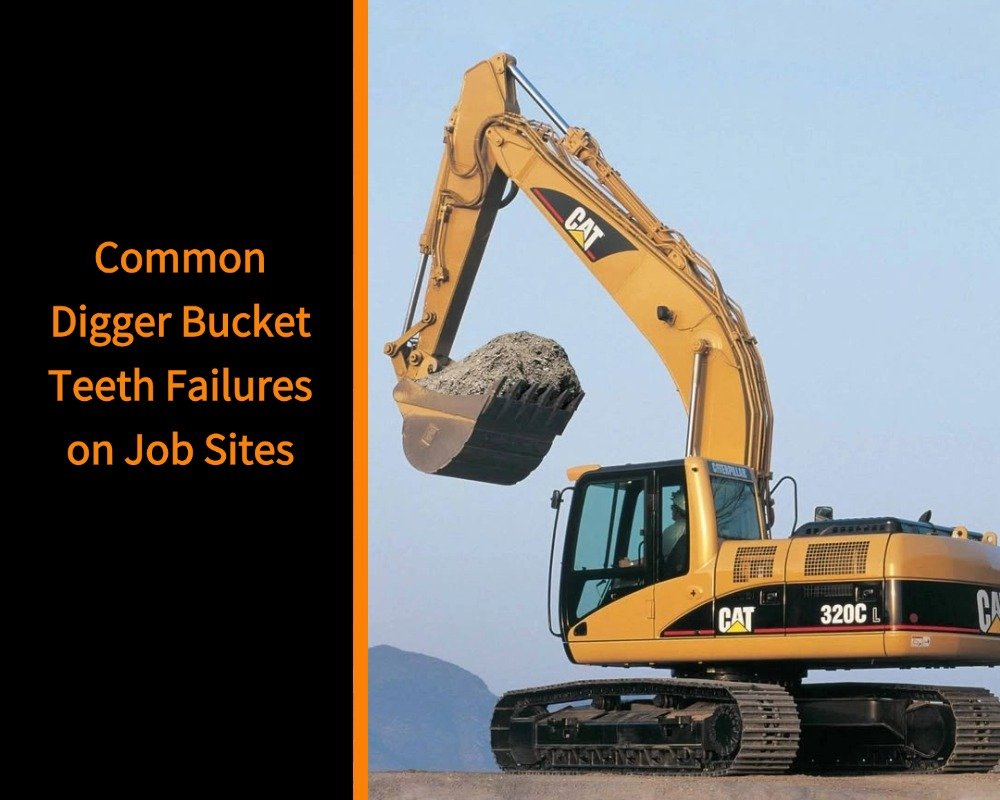
- Modos de falla comunes: Digger bucket teeth on construction sites mainly face four major failure modes: early breakage, abnormal uneven wear, pin shearing and falling off, and tooth socket cracking, which directly cause project downtime and increased costs.
- Root Cause Analysis: Frequent failures of inferior bucket teeth mainly stem from metallurgical defects such as internal steel inclusions and blowholes, mismatch between heat treatment hardness and toughness, and localized overloading caused by incorrect selection for working conditions.
- GFM Manufacturing Solutions: As professional fabricantes de dientes de cucharón de excavadora, GFM selects high-quality high-strength alloy steel, adopts advanced forging and investment casting processes along with full temperature-controlled heat treatment technology since 2011, thoroughly eliminating internal defects.
- Long-term Warranty and Full Brand Compatibility: GFM provides a quality warranty of no less than 1 año o 2.000 horas, accurately fitting major excavator brands including Komatsu, Caterpillar, Hitachi, Volvo, and SANY, with strong capacity for stable batch supply.
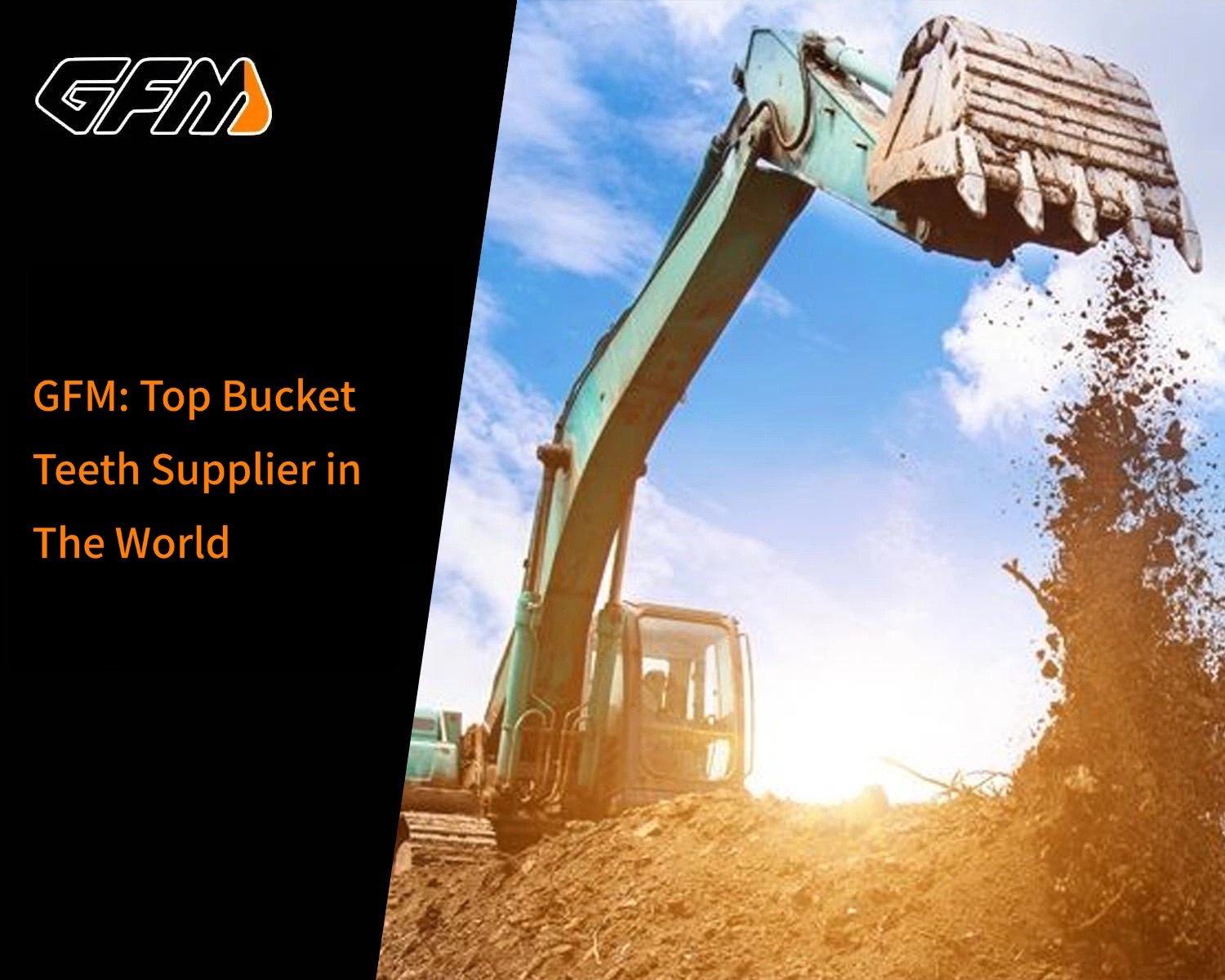
In high-intensity construction and mining operations, dientes de la cuchara de la excavadora are among the fastest-wearing and most complex ground-engaging tools on excavators. For global buyers and construction equipment managers, frequent premature bucket teeth failure not only causes a sharp surge in direct replacement costs, but also leads to unscheduled equipment downtime and massive schedule losses. As professional fabricantes de dientes de cucharón de excavadora, GFM has deeply analyzed thousands of field failure cases, summarized the most common bucket teeth failure modes on job sites, and provided high-wear-resistant, high-toughness solutions starting from source materials and manufacturing processes.
Five Common Bucket Teeth Failure Modes on Construction Sites
In complex operating environments, bucket teeth must simultaneously withstand huge digging shear forces, high-frequency impact from hard objects, and intense abrasive wear. Working conditions on construction sites change rapidly, and understanding the specific manifestations of these failures is the first step toward targeted prevention and material selection. According to field statistics, over 65% of abnormal bucket teeth scrapings are concentrated in the following five typical failure modes:
- Root or Body Breakage: Mostly occurs during rock breaking, frozen ground excavation, or digging hard media such as granite. The bucket tooth suddenly breaks under lateral bending moments or severe impact, with the fracture usually showing typical brittle fracture characteristics.
- Abnormal Uneven Wear and Early Blunting: Wear on both sides of the bucket tooth is extremely uneven, or the tooth point is rapidly blunted in a short time, causing digging resistance to increase by over 30%, which significantly elevates excavator fuel consumption and hydraulic system load.
- Lock Pin Shearing and Falling Off: Due to excessive clearance between the bucket tooth and adapter, the pasador de la cuchilla de la cuchara bends or shears under impact forces, causing the tooth to fall off during operation, or even drop into downstream crushing equipment causing secondary accidents.
- Tooth Socket Expansion and Cracking: The mounting cavity at the tail of the bucket tooth undergoes plastic deformation under high stress, causing the socket to expand and loosen, failing to lock tightly onto the adapter.
- Adapter Premature Wear: Due to insufficient bucket tooth hardness or poor fit precision, abrasives invade the connection interface, causing severe wear to the expensive adapter base, forcing operations to halt for welding repairs.
The aforementioned failures not only disrupt construction schedules on site, but also cause additional impact damage to the excavator structural components. Therefore, selecting high-quality, impact-resistant bucket teeth is a key measure to ensure construction efficiency and reduce overall operating costs.
💡 Preguntas frecuentes
Q: Why are excavator bucket teeth prone to premature breakage during mining operations?
A: During mining operations, bucket teeth bear extremely high instantaneous impact loads. If the impact toughness of the bucket tooth is below 25 J/cm², or if internal casting shrinkage cavities and stress concentration areas exist, the material cannot absorb impact energy through plastic deformation, leading to sudden brittle fracture.
Three Root Causes of Bucket Teeth Failures
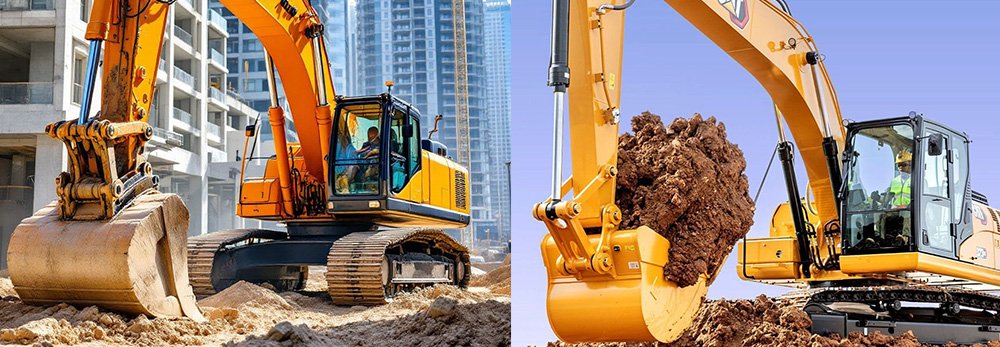
To resolve bucket teeth failures on job sites, one must dig deep into the underlying metallurgy and physical mechanisms. Many inferior replacement parts fail after only a few hundred or even dozens of hours of use, and the root cause lies in the lack of quality control during manufacturing.
- Metallurgical Defects and Inferior Materials: Some small processing plants use recycled scrap steel or low-alloy steel with non-compliant chemical compositions to lower costs. This steel contains large amounts of sulfur and phosphorus impurities, as well as defects such as blowholes and slag inclusions, greatly reducing the material’s tensile strength and fatigue limit.
- Improper Heat Treatment Control: Hardness and toughness in bucket teeth are a pair of conflicting properties. If quenching hardness is too high (e.g., above HRC 55), the material becomes extremely brittle and breaks easily; if hardness is too low (below HRC 42), wear resistance becomes poor, drastically shortening service life. Heat treatment lines lacking automated control cannot achieve ideal microstructural transformation.
- Mismatch in Working Conditions and Selection: Misusing standard teeth intended for general earthwork in rock-breaking conditions, or geometric tolerance mismatch between the bucket tooth and the adapter, will double localized stress concentrations.
Analyzing these root causes shows that the durability of bucket teeth depends entirely on the manufacturer’s raw material selection and technical process level. Only by choosing professional manufacturers that master core metallurgy and heat treatment technologies can these hazards be eliminated from the source.
💡 Preguntas frecuentes
Q: How to tell whether a bucket tooth has reached normal wear-and-tear retirement or suffered failure caused by quality defects?
A: Normally worn bucket teeth should maintain uniform geometric thinning until the point wears down to its limit. Quality defects usually manifest as full breakage or chipping early in operation (less than 100 hours), or visible blowholes, dark spots, and metallic inclusions at the fracture site.
GFM High-Strength Forging and Heat Treatment Processes
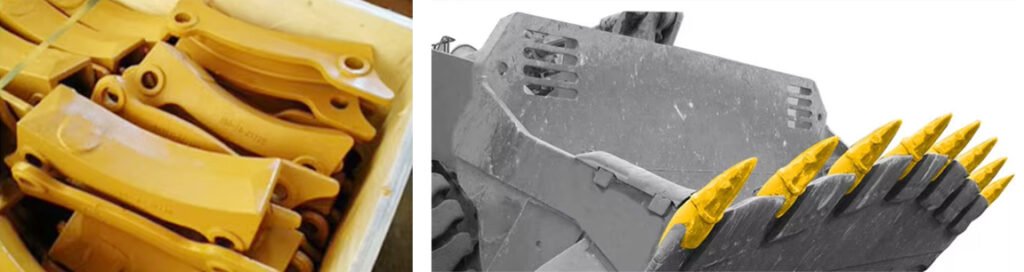
GFM is an experienced professional manufacturer specializing in excavator and bulldozer components since 2011. To thoroughly resolve common job-site bucket teeth failures, GFM has fully upgraded and innovated its raw material selection, forming technologies, and heat treatment system.
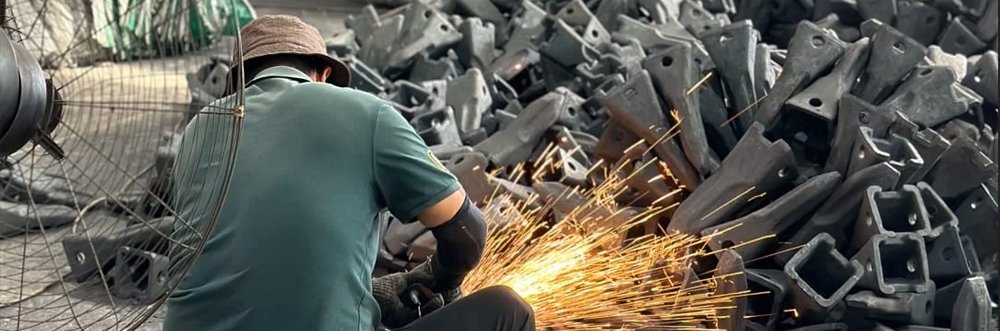
- Selection of Premium High-Strength Steel: GFM strictly controls quality from the source, using precisely smelted chromium-molybdenum-nickel high-strength alloy steel. By optimizing carbon equivalent and trace element ratios, the material achieves both extremely high hardenability and excellent impact resistance.
- Advanced Forging and Forming Technologies: For high-impact, heavy-duty applications, GFM employs large automated forging lines. Hundreds of tons of compressive force thoroughly break down the cast grain structure inside the steel, press out internal voids, and form continuous metal flow lines, increasing the tensile strength of dientes de la cuchara de la excavadora by over 40%; investment casting lines are also equipped to ensure geometric tolerances are controlled within ±0,5 mm.
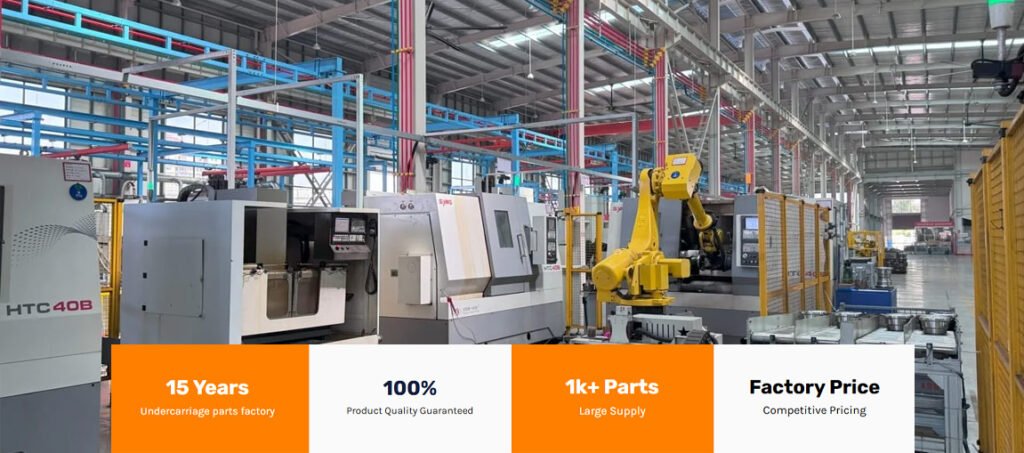
- Full Temperature-Controlled Continuous Heat Treatment System: GFM’s factory is equipped with automated temperature-controlled quenching and tempering furnaces. Through precise mesh-belt heat treatment curves, bucket teeth obtain a uniform martensitic structure from surface to core, achieving a perfect balance between a surface hardness of HRC 48-54 and a core impact toughness of ≥ 28 J/cm².
Relying on these exquisite processes and automated production lines, bucket teeth produced by GFM achieve an average service life of 500 to 1000+ hours, several times higher than ordinary market castings. Every batch of products undergoes spectral analysis, metallographic inspection, and ultrasonic flaw detection to ensure that every item delivered to customers meets the highest standards.
💡 Preguntas frecuentes
Q: What are the core performance advantages of forged bucket teeth compared to ordinary cast bucket teeth?
A: The forging process eliminates blowholes and shrinkage porosity generated during casting through mechanical pressure, significantly improving metal density and fiber continuity. Therefore, forged bucket teeth have higher tensile strength and stronger resistance to breakage, making them especially suitable for high-intensity rock-breaking and mining excavation.
Full Brand Compatibility and High-Quality Parts Support
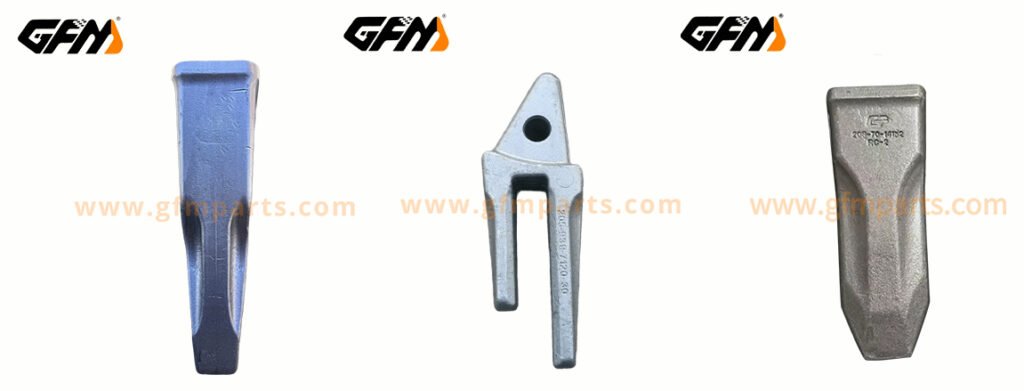
As global leading fabricantes de dientes de cucharón de excavadora, GFM deeply understands buyers’ needs for parts universality and precise fitting. Our bucket teeth product line covers almost all mainstream excavator models and tooth specifications on the market, providing highly compatible standardized replacement parts.
- Compatibility with Mainstream Japanese and Korean Brands: Accurately compatible with excavator buckets of various models from brands such as Komatsu, Hitachi, Kobelco, Daewoo/Doosan, Hyundai, Kubota, and Yanmar.
- Compatibility with Famous European and American Brands: Seamlessly matches mounting hole positions, adapters, and locking systems of heavy-duty equipment from Caterpillar, Volvo, and Bobcat.
- Domestic Brands and Multi-Model Coverage: Fully covers and fits mainstream and specialized excavator models from domestic brands like SANY, Liugong, XCMG, and Shantui.
Strong production lines and automated equipment endow GFM with robust large-batch supply and multi-model stocking capabilities. Whether for standard earthmoving teeth, heavy-duty mining teeth, or rock penetration teeth, GFM can provide accurately matched products to ensure timely delivery, helping customers minimize equipment downtime.
💡 Preguntas frecuentes
Q: Can bucket teeth produced by GFM achieve a completely seamless fit with original factory adapters?
A: Yes, GFM strictly manufactures according to original specifications and tolerance standards, ensuring geometric mounting dimensions are controlled within ±0,5 mm, enabling seamless lock-and-fit compatibility with original factory adapters and pasadores de dientes de cucharón of major brands.
Daily Maintenance Guide to Reduce Bucket Teeth Failure Rates
Reducing equipment downtime on construction sites requires not only choosing a reliable bucket teeth manufacturer, but also adopting scientific field maintenance and management strategies. Proper maintenance methods can extend bucket teeth service life exponentially.
- Establish Daily Visual and Fastening Inspection Routines: During daily pre-shift inspections, focus on checking the locking status of pasadores de dientes de cucharón and retainers. Once a loose pin or failed elastic retainer ring is found, replace it immediately to prevent bucket teeth from accidentally falling off and damaging the adapter during operation.
- Timely Replace Bucket Teeth Reaching Wear Limits: When bucket teeth wear down to 2/3 of their original length, or when the adapter nose is about to be exposed, new teeth must be replaced promptly. Continuing to use excessively worn bucket teeth causes uneven stress on the lip plate and adapter, leading to costly structural welding damage.
- Select Suppliers Offering Long-term Warranties to Lower Overall Costs: Avoid looking solely at unit prices when purchasing; comprehensively evaluate parts service life and warranty commitments, and choose professional factories with high-quality guarantees.
To provide buyers with complete peace of mind, GFM offers a quality warranty period of no less than 1 año o 2.000 horas for all its dientes de la cuchara de la excavadora products. If breakage or quality defects caused by non-operator error occur within the warranty period, GFM will provide worry-free replacement guarantees, effectively reducing your overall operational risks.
💡 Preguntas frecuentes
Q: How to evaluate a supplier’s true production and delivery capabilities when purchasing excavator bucket teeth?
A: It is recommended to focus on assessing the supplier’s years of establishment (e.g., GFM specializing in this field since 2011), whether the factory possesses complete testing equipment like spectrometers and ultrasonic flaw detectors, whether it operates continuous heat treatment assembly lines, and whether it provides clear quality warranty terms (such as a 2000-hour warranty).
| Obtenga una cotización rápida y gratuita | Correo electrónico: henry@gfmparts.com | WhatsApp: +86 17705953659 |
Bucket teeth failures on construction sites directly impact construction efficiency and project profitability. By choosing GFM’s high-strength dientes de la cuchara de la excavadora crafted through strict heat treatment and precision forging, you can effectively curb common problems such as breakage, uneven wear, and detachment. With manufacturing experience dating back to 2011, precise fit across all mainstream brands, and a solid warranty of no menos de 1 año o 2.000 horas, GFM is your trustworthy engineering machinery spare parts partner. Feel free to contact GFM’s technical expert team anytime to get the latest product specification sheets, compatibility lists, or request free sample trials!