Key Takeaways
- Understand Industry Trends: The 2026 construction machinery market places higher emphasis on total cost of ownership (TCO). The wear resistance and impact resistance of an excavator carrier roller directly determine the maintenance costs of the undercarriage system.
- Focus on Core Manufacturing: Superior carrier roller manufacturers must master high-strength alloy steel (such as 40Mn2/50Mn) selection, precision machining, and deep heat treatment induction hardening processes.
- Prioritize Brand Compatibility: During procurement, it is essential to verify the excavator carrier roller for precise dimensional accuracy and mounting hole spacing compatibility across major equipment brands like Komatsu, Caterpillar, Hitachi, and SANY.
- Strictly Review Warranties: Reliable suppliers typically offer a quality warranty of no less than 1 year or 2,000 operating hours for an excavator carrier roller, backed by complete quality control workflows and volume supply capabilities.
- Rely on Professional Manufacturing: Since 2011, GFM has specialized in the construction machinery undercarriage sector, leveraging mature production lines and rigorous quality management to provide cost-effective excavator carrier roller manufacturing solutions to global clients.
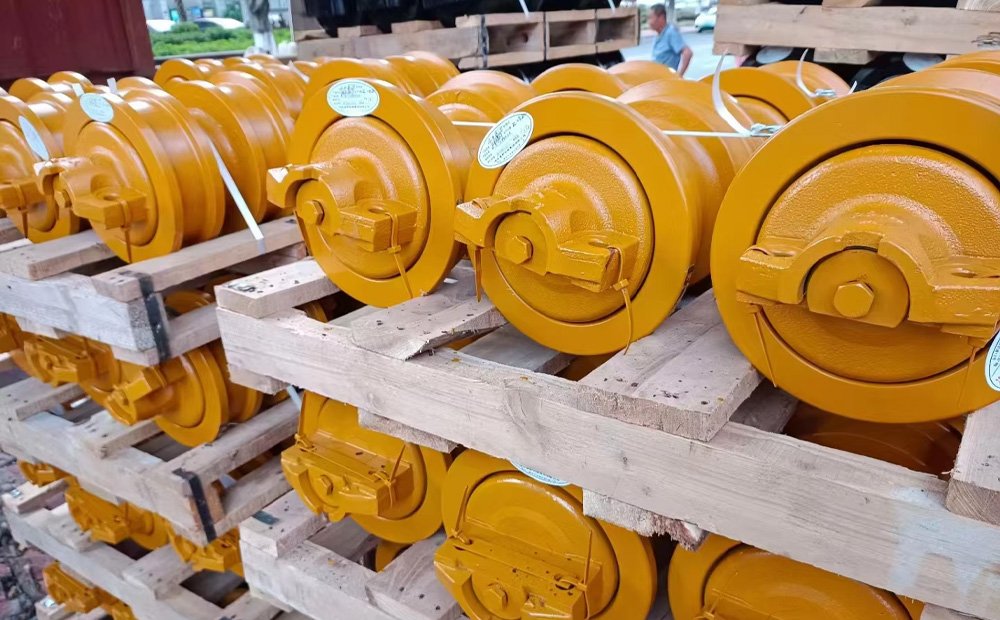
In the daily operations of construction machinery and mining equipment, the undercarriage system withstands the vast majority of machine weight and operating impacts. As a core component that supports and guides the track, the quality of an excavator carrier roller directly impacts track tension, undercarriage wear rates, and overall equipment operational efficiency.
As global infrastructure and mining projects raise their standards for equipment reliability, procurement professionals must evaluate potential supply chains comprehensively—looking beyond unit prices to assess material, craftsmanship, compatibility, and warranty assurances.
2026 Excavator Undercarriage Market Procurement Trends
The global construction machinery undercarriage parts market is undergoing significant technical iteration and purchasing logic restructuring. In 2026, the construction and mining industries face unprecedented demand for cost reduction and efficiency gains. Buyers no longer focus solely on low initial purchasing costs; instead, they have shifted their focus to Total Cost of Ownership (TCO) and zero unscheduled downtime.
Industry research shows that undercarriage maintenance and replacement costs account for roughly 40% to 50% of total routine machinery maintenance expenses. Although an excavator carrier roller is relatively compact, it shoulders the vital responsibility of supporting the upper track weight, preventing track sagging or slippage, and absorbing harsh operational vibrations.
According to the latest supply chain trends, the 2026 market exhibits three primary characteristics:
- Widespread Adoption of High-Wear Materials: Mining and harsh rock conditions demand deeper hardness layers and enhanced sealing performance from an excavator carrier roller, accelerating the replacement of traditional carbon steel components with high-strength alloy steel.
- Surging Demand for Multi-Brand Precision Compatibility: Equipment rental companies and large engineering contractors prefer sourcing standardized excavator carrier roller components that seamlessly fit across multiple brands—such as Komatsu, Caterpillar, Volvo, and Hitachi—to minimize warehouse inventory burdens.
- Heightened Scrutiny of Supply Chain Warranty and Transparency: Buyers enforce strict standards on carrier roller manufacturers regarding excavator carrier roller production stability, standardized inspection workflows, and post-sale warranty commitments (such as a 1-year or 2,000-hour warranty).
💡 Frequently Asked Questions
Q: How does choosing a high-quality carrier roller extend excavator undercarriage lifespan?
A: A high-quality excavator carrier roller features a high-hardness hardened layer and exceptional impact resistance, keeping the track properly tensioned and reducing the risk of track deviation or derailment. Utilizing qualified excavator carrier roller parts can extend overall undercarriage service life by 25% to 40%, significantly lowering unexpected downtime and maintenance expenses.
4 Core Metrics for Evaluating Quality Carrier Roller Manufacturers
When facing numerous component suppliers in the market, how can buyers accurately assess technical competence and delivery capabilities? Industry experts recommend evaluating four core metrics: material selection, heat treatment process, sealing technology, and quality testing.
4 Key Stages of Procurement Evaluation:
- Stage 1 (Raw Material Selection): Select premium high-strength alloy steel (40Mn2/50Mn) to guarantee impact toughness.
- Stage 2 (Deep Induction Hardening): Apply induction hardening or overall quenching to create a high-hardness wear layer.
- Stage 3 (Floating Seal Integration): Install dual-cone floating seal rings for lifetime maintenance-free protection.
- Stage 4 (Load Testing): Perform 100% air-tightness testing and high-load capacity testing before factory release.
1. Premium High-Strength Alloy Steel Selection
The body of a high-quality excavator carrier roller is typically made from high-strength alloy structural steel, such as 40Mn2 or 50Mn. These steel grades offer superior hardenability and impact toughness, preventing body cracking or premature flaking under heavy loads, muddy conditions, and severe vibrations. Inferior products often use cheap recycled scrap steel containing internal pores and high impurity levels, leading to early fractures.
2. Deep Heat Treatment and Hardness Distribution
Heat treatment processes represent a critical factor in determining an excavator carrier roller‘s working lifespan. Qualified carrier roller manufacturers utilize medium/high-frequency induction hardening or overall quenching methods.
- Surface Hardness: Must reach HRC 52–58 to resist continuous friction from track chain links.
- Hardened Layer Depth: Should be maintained at 5mm – 10mm. An excessively shallow hardened layer causes underlying soft substrate exposure after short-term wear, triggering accelerated deterioration.
| Evaluation Metric | Industry Compliance Standard | Inferior Supplier Pitfalls |
| Roller Body Material | 40Mn2 / 50Mn High-Strength Steel | Recycled scrap steel or standard carbon steel (e.g., Q235) |
| Surface Hardness | HRC 52 – 58 | HRC 40 – 45 (too soft, wears rapidly) or >62 (too brittle, cracks easily) |
| Hardened Layer Depth | 5mm – 10mm | < 3mm (shallow hardening, reduces lifespan by 60%) |
| Sealing System | Duo-Cone Floating Seal + High-Temp NBR | Standard skeleton oil seal (prone to leakage and failure) |
3. High-Performance Floating Seals and Lubrication Systems
An excavator carrier roller operates submerged in mud, water, sand, and dust over long durations, making the internal bearing lubrication state paramount. A quality excavator carrier roller features built-in duo-cone floating seals paired with high-performance nitrile butadiene rubber (NBR) O-rings and heavy-duty gear oil, delivering lifetime maintenance-free and zero-leakage protection.
4. Precision Machining and 100% Inspection Protocols
The fit tolerances between the excavator carrier roller shaft and bushings must be held within micrometer levels. Before dispatch, qualified factories must perform 100% air-tightness testing, nondestructive flaw detection, and high-load bearing tests on every batch of excavator carrier roller products to ensure parts do not seize or leak oil under extreme operating conditions.
💡 Frequently Asked Questions
Q: How do you determine the wear level and replacement timing for an excavator carrier roller?
A: Inspect the tread wear depth on the excavator carrier roller, check for oil leakage, and listen for abnormal operational noises. When tread wear exceeds 15%–20% of the original factory standard, or if floating seal failure leads to lubricant leakage and bearing seizure, replace the excavator carrier roller immediately to prevent accelerated wear on track link assemblies.
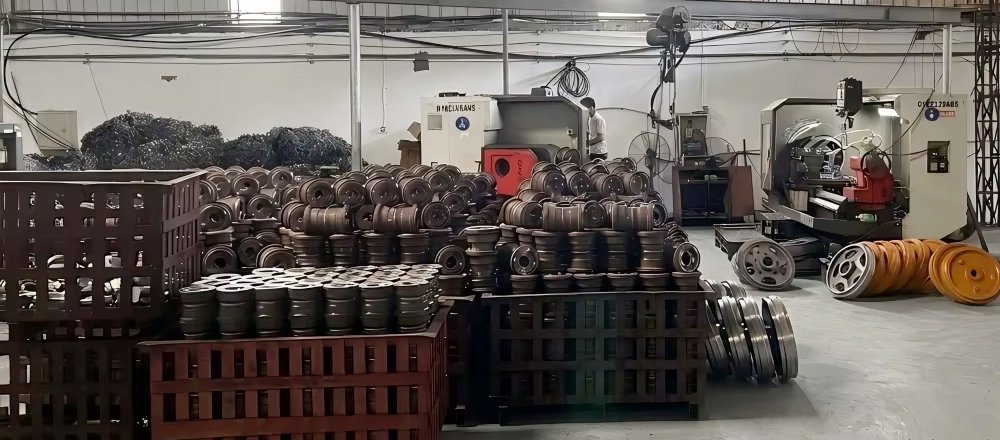
3 Major Pitfalls to Avoid When Selecting Carrier Roller Suppliers
In B2B procurement practice, purchasing managers frequently encounter technical and pricing traps set by vendors, ultimately leading to inflated project costs later on.
| Common Procurement Pitfall | Potential Risks and Consequences | Mitigation Strategies and Solutions |
| Relying on Low-Cost Non-Standard Parts | Service life drops to 1/3 of standard parts, causing frequent downtime and repairs | Inspect genuine Material Test Reports (MTR) and heat treatment process specs |
| Ignoring Seal Component Grades | Sand, mud, and water ingress lead to early bearing seizure or severe oil leaks | Confirm the use of duo-cone floating seals and high-strength rubber/plastic materials |
| Overlooking Shaft & Bushing Tolerances | Loose tolerances cause mounting issues, loose bolts, or uneven tread wear | Request micrometer-level machining tolerance standards and assembly test data |
Pitfall 1: Focusing Only on Unit Price, Ignoring Total Lifetime Costs
Some non-standard small workshops cut costs aggressively by reducing heat treatment times, using low-grade cast iron, or skimping on hardened layer depth. Although such an excavator carrier roller may be 20%-30% cheaper upfront, its service life is often less than 1/3 of a standard part. In real-world operations, the downtime losses and labor costs associated with frequent part replacements far exceed any initial savings on unit prices.
Pitfall 2: Overlooking Part Interchangeability and Dimensional Tolerances
Different equipment brands (such as Komatsu vs. Caterpillar) or even different series within the same brand (such as CAT 320D vs. CAT 320E) demand precise specifications regarding mounting hole spacing, center distance, and shaft diameter. If carrier roller manufacturers lack sufficient machining accuracy, the resulting excavator carrier roller will suffer installation difficulties, bolt loosening, or track link binding.
Pitfall 3: Vague Warranty Terms and Unreliable After-Sales Service
Many vendors verbally promise “quality assurance” without defining specific warranty durations or operational scope within contract terms. When breakdowns occur, they frequently evade liability by claiming “excessively harsh working conditions.” Reputable manufacturers clearly specify a written warranty of no less than 1 year or 2,000 hours for an excavator carrier roller, complete with fast compensation and replacement dispatch mechanisms.
💡 Frequently Asked Questions
Q: What warranty services do quality carrier roller manufacturers typically offer?
A: Established manufacturers in the industry (such as GFM) generally provide a quality warranty of no less than 1 year or 2,000 operating hours for every excavator carrier roller they produce. The warranty covers non-human damage such as roller body cracking, shaft detachment, premature seal failure, and oil leaks, supported by rapid-response compensation and replacement parts dispatch.
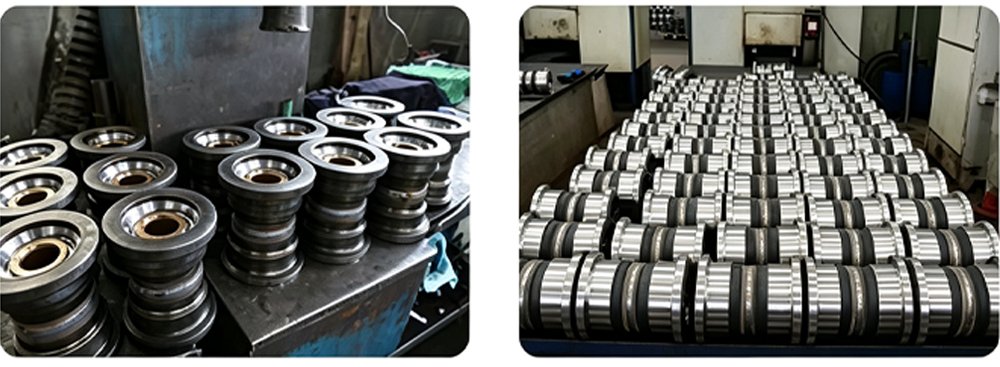
Precision Compatibility Guide for Major Excavator Carrier Rollers
Standardization and precise compatibility in construction machinery undercarriage parts are essential for keeping equipment running efficiently. Leading market excavator brands have distinct undercarriage designs, requiring careful matching when purchasing an excavator carrier roller.
Undercarriage Structural Characteristics of Major Brands
- Komatsu Series:
- Structural Traits: Imposes extremely strict requirements on sealing and sand/gravel ingress protection, with ultra-precise clearance tolerances between shafts and bushings.
- Fit Focus: Models such as the PC200 and PC300 require an excavator carrier roller equipped with high-pressure resistant floating seals.
- Caterpillar Series:
- Structural Traits: Features heavy machine operating weights and high operational loads, demanding maximum load capacity and bending strength from carrier rollers.
- Fit Focus: Models like the CAT 320 and CAT 330 require an excavator carrier roller body made from deep-forged high-strength steel to endure high-impact forces.
- Hitachi & Kobelco Series:
- Structural Traits: Emphasizes smooth movement and low frictional loss, requiring high standards for tread roundness and surface finish on an excavator carrier roller.
- Leading Domestic Brands (SANY, XCMG, Liugong, Shantui):
- Structural Traits: Covers a vast array of working conditions—from mini excavators to heavy mining excavators—requiring suppliers to maintain extensive excavator carrier roller inventory and fast delivery capabilities.
| Target Brand Series | Core Equipment Operating Demand | Excavator Carrier Roller Fit Focus |
| Caterpillar (CAT) | Heavy loads, high-impact shocks | Heavy-wall forged body + deep hardened layer to resist bending fractures |
| Komatsu | Sand/dust protection, high-freq rotation | Precision fit tolerances + floating seal system to block mud and water ingress |
| Hitachi / Kobelco / SANY | Smooth operation, low friction loss | Low-friction tread design + advanced wear-resistant heat treatment |
Before placing orders, procurement teams should provide vendors with the exact equipment model, undercarriage nameplate details, or OEM Part Numbers. Technical specialists can then verify mounting hole spacing, shaft diameter, and overall height to ensure a 100% seamless excavator carrier roller installation.
💡 Frequently Asked Questions
Q: How do manufacturers ensure cross-brand compatibility during volume undercarriage procurement?
A: Top carrier roller manufacturers maintain comprehensive OEM part number databases and utilize high-precision CNC machining when manufacturing an excavator carrier roller. By strictly controlling mounting hole pitch, shaft diameters, flange widths, and spline specs, they ensure products match 100% with mounting standards for brands like Komatsu, Caterpillar, SANY, and others.
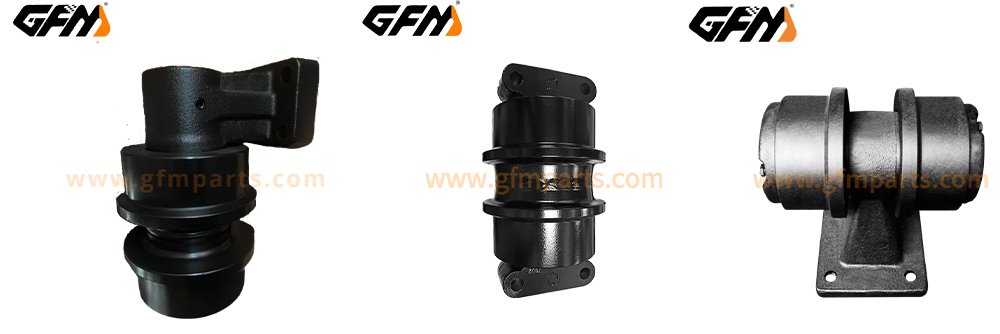
GFM Factory Precision Manufacturing and Volume Customization Strengths
As a reliable global partner in the excavator carrier roller sector, GFM is an experienced professional components manufacturer. Established in 2011, GFM has remained dedicated to providing high-quality excavator carrier roller components and matching fasteners to global clients.
1. Years of Deep Manufacturing Expertise and Focused Production
GFM operates modern manufacturing facilities spanning tens of thousands of square meters, equipped with automated production lines focused on producing high-performance excavator carrier roller units:
- Core Manufacturing: Dedicated R&D and production of excavator carrier roller products tailored for various tonnage classes and operating conditions.
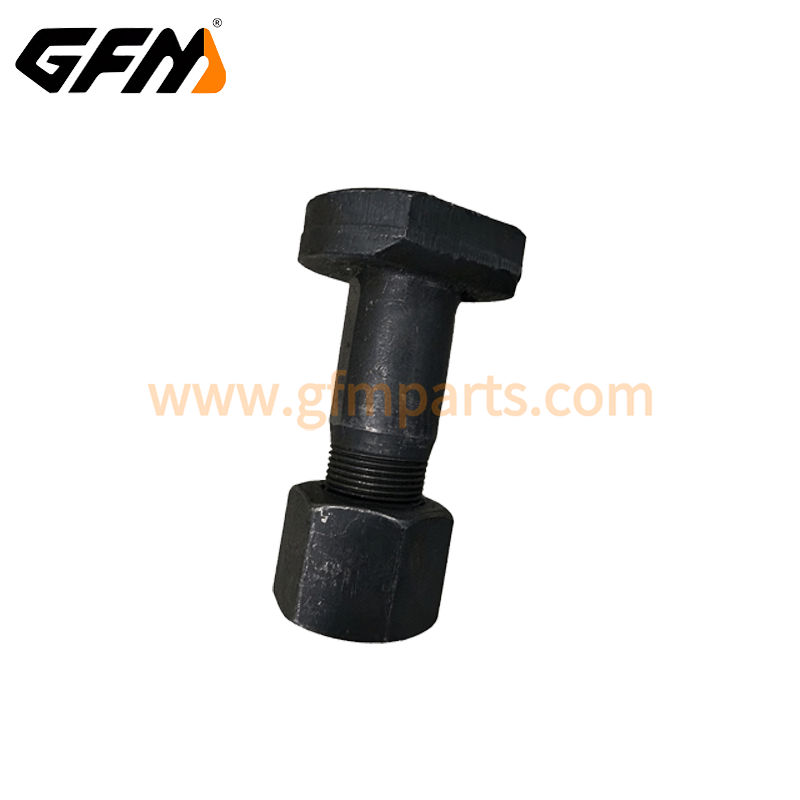
- Matching Fasteners and Accessories: To guarantee secure installation and smooth operation for every excavator carrier roller, GFM supplies matching high-strength bolts, nuts, pins, and wear-resistant bushings.
2. Premium Material Selection and Advanced Processes
GFM selects top-tier high-strength alloy steel (such as 40Mn2/50Mn) as raw material for every excavator carrier roller. The factory utilizes advanced automated forging and precision casting equipment, paired with fully computer-controlled heat treatment lines (covering overall quenching, medium-frequency induction hardening, and tempering).
- Hardness & Wear Resistance: The excavator carrier roller surface hardness reaches HRC 52–58, with a hardened layer depth maintained at 5-10mm, ensuring the roller maintains excellent durability in mining, rock, and frozen soil conditions.
- Precision Machining: CNC lathes and precision grinders ensure every dimension of the excavator carrier roller is exact, eliminating premature wear caused by loose installation tolerances.
3. Broad Compatibility with Major Global Brands
GFM possesses strong engineering R&D and precise matching capabilities. Our excavator carrier roller lineup is fully compatible with over 15 major global brands and hundreds of machine models, including:
- Komatsu, Hitachi, Caterpillar, Volvo, Kobelco
- Daewoo, Doosan, Hyundai, Kubota, Bobcat, Yanmar
- SANY, Liugong, XCMG, Shantui, and more.
4. Rigorous Quality Control Systems and Solid Warranties
GFM considers product quality the cornerstone of enterprise survival. The factory is equipped with optical emission spectrometers, hardness testers, metallographic microscopes, and tensile testing machines to monitor every step from raw material inspection to finished product release.
To provide solid protection for global buyers, GFM commits to a standard warranty: every excavator carrier roller product comes with a quality guarantee of no less than 1 year or 2,000 operating hours. Backed by volume production capabilities and flexible manufacturing services, GFM delivers reliable quality and prompt lead times to help clients lower operational risks and purchasing costs.
| Get a quick free quote | Email: henry@gfmparts.com | Whatsapp: +86 17705953659 |
Selecting a high-quality excavator carrier roller is more than a simple part replacement; it is a vital strategy for ensuring machinery operates efficiently while keeping total operational costs under control. By thoroughly evaluating supplier material choices, heat treatment depths, sealing systems, and warranty guarantees, procurement professionals can effectively steer clear of low-quality, low-price traps.
Since 2011, GFM has relied on advanced manufacturing techniques, precise compatibility across 15+ major brands, and a solid 1-year/2,000-hour warranty to continuously supply premium excavator carrier roller solutions to global clients.
Ready to optimize your undercarriage procurement efficiency?Contact the GFM team today to receive our dedicated product catalog and competitive volume quotes. Contact us to get a free sample!