أهم النقاط
- Core Difference: The primary differences between heavy-duty and standard excavator undercarriage parts lie in material grade (high-strength alloy steel vs. standard carbon steel), heat treatment quenching depth (8–12mm+)، و reinforced structural thickness.
- Operating Conditions: In mining, quarrying, highly abrasive granite extraction, and hydraulic breaker operations, using heavy-duty undercarriage parts can reduce 30%–50% of abnormal wear, significantly lowering equipment downtime losses.
- Structural Reinforcement: Heavy-duty components utilize Duo-Cone Seals and thickened rim designs, greatly enhancing wear resistance and anti-shear capability.
- مزايا مصنع GFM: Since 2011, GFM has specialized in manufacturing undercarriage parts, featuring high-precision forging and heat treatment production lines fully compatible with Caterpillar, Komatsu, Hitachi, SANY, and other major brands.
- Warranty Commitment: All undercarriage parts manufactured by GFM come with a quality warranty of لا تقل عن سنة واحدة أو 2000 ساعة, supporting bulk orders and custom projects.
In the heavy construction machinery industry, selecting the right undercarriage parts is a crucial factor in determining project operational efficiency and controlling total cost of ownership (TCO). As a professional مورد قطع غيار الحفارات, GFM frequently receives inquiries from buyers: What is the difference between heavy-duty excavator parts and standard excavator parts? Simply put, the core differences lie in steel material grade, heat treatment depth, structural design، و load-bearing capacity under extreme pressure conditions. Standard parts are designed for light-to-medium earthmoving projects, whereas heavy-duty أجزاء الهيكل السفلي للحفارة are heavy-load solutions tailored for harsh working environments such as mining, rock stripping, and high-intensity breaker applications.
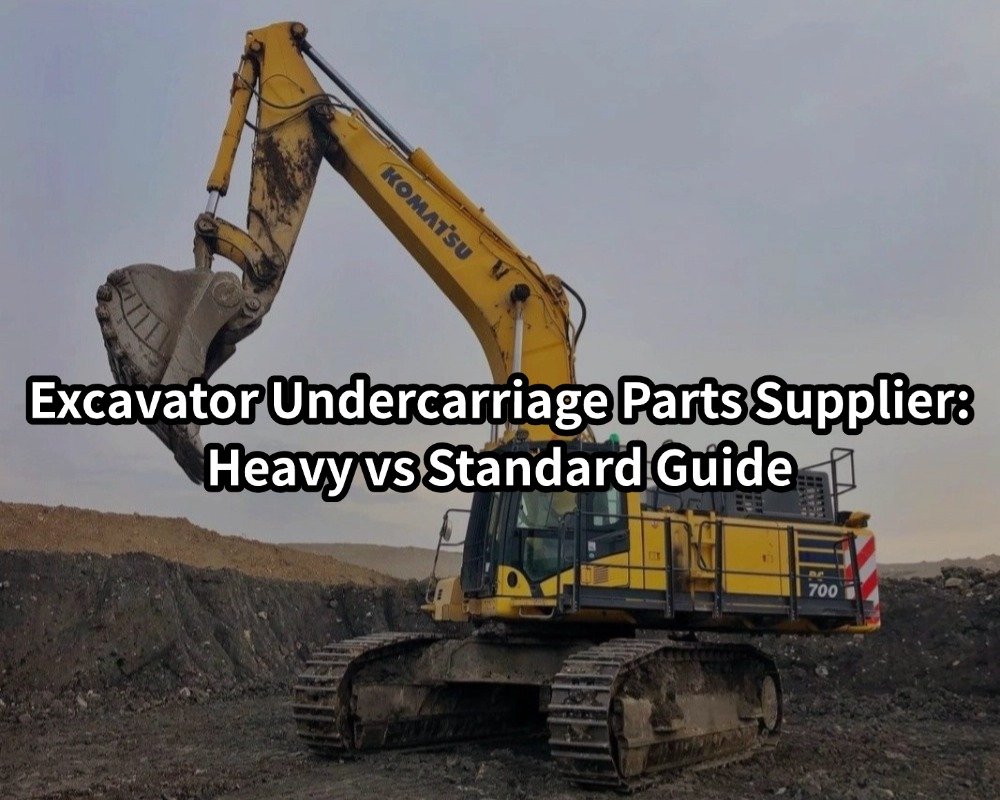
Heavy vs Standard Undercarriage Parts Core Differences
The fundamental difference between heavy-duty and standard undercarriage parts lies in metallurgical composition and heat treatment processing. Standard excavator undercarriage components usually adopt medium carbon steel (such as 45# steel or 40Cr), which is sufficient to handle low-to-medium stress environments like daily earthmoving, municipal construction, and site leveling. However, when facing highly abrasive or continuous high-impact working conditions, standard parts are prone to rapid surface spalling or localized cracking.
Heavy-duty undercarriage parts generally select high-strength low-alloy steel or premium forged alloy steel (such as 40Mn2, 35CrMo). These materials have higher proportions of chromium, molybdenum, and manganese added during the smelting stage, conferring exceptional hardenability and tensile strength.
The difference in hardening depth is even more pronounced:
- Standard Part Hardened Layer: The surface medium-frequency quenching hardened layer depth is typically maintained at 3–5mm.
- Heavy-Duty Part Hardened Layer: Utilizing deep overall induction quenching or step heat treatment processes, the quenching depth can reach 8–12mm or even deeper. Even if surface wear occurs, the core interior retains extremely high hardness (HRC 52–58) and wear resistance.
| Physical Attributes & Performance Indicators | Standard Excavator Undercarriage Parts | Heavy-Duty Excavator Undercarriage Parts |
| Primary Material Selection | Medium Carbon Steel (e.g., 45# / 40Cr) | High-Strength Alloy Steel (e.g., 40Mn2 / 35CrMo) |
| قوة الشد (ميجا باسكال) | $\ge 750\text{ MPa}$ | $\ge 1100\text{ MPa}$ |
| Quenching Hardened Layer Depth | 3–5 mm | 8–12 mm+ |
| Core Surface Hardness | HRC 48–52 | HRC 52–58 |
| Design Wear Life | 2000–3000 hours (Normal conditions) | 4000–6000 hours+ (Mining / Heavy-load conditions) |
| Applicable Work Environment | Earthmoving, leveling, general construction | Mining, quarrying, abrasive rock stripping, breaker work |
💡 الأسئلة الشائعة
Q: What is the average service life of heavy-duty excavator undercarriage parts?
A: Under normal to moderately abrasive operating conditions, premium heavy-duty undercarriage parts can typically reach a service life of 4,000 to over 6,000 hours, which is approximately 1.5 to 2 times the lifespan of standard undercarriage parts in the same harsh environment. The exact service life depends on the soil abrasiveness index, machine tonnage, and daily maintenance practices.
Operating Conditions Determine Undercarriage Standards
In the daily operation of construction machinery, undercarriage system maintenance costs usually account for 40%–50% of total machine repair expenses. Therefore, selecting undercarriage components reasonably based on actual operating conditions is essential to avoiding unplanned downtime and improving return on investment (ROI).
In granite quarries, hard rock mines, or job sites equipped with large hydraulic breakers, the undercarriage system must not only bear the static load of the entire machine but also withstand dynamic impacts of up to dozens of tons as well as particle abrasion.
| Project Type | Operating Environment | Recommended Part Type | Core Purpose of Selection |
| General Engineering | Sand, clay, municipal excavation, and site leveling | Standard Undercarriage Parts | Control initial procurement costs and meet lifespan requirements for standard conditions |
| Extreme Heavy-Duty Engineering | Mining, quarrying, granite stripping, heavy breaker operations | Heavy-Duty Undercarriage Parts | Enhance impact and wear resistance, maximize service life, and reduce downtime losses |
If standard undercarriage parts are mistakenly used in such harsh operating conditions, it can easily lead to severe failures:
- Track Roller Cracking and Shaft Fracture: Due to insufficient roller wall thickness or inadequate shaft shear strength, fracture occurs under lateral impact forces.
- Excessive Sprocket Tooth Wear: Due to an overly shallow hardness layer, sprocket tooth profiles deform rapidly, causing pitch misalignment and “jumping teeth.”
- Track Chain Pitch Stretching: Insufficient wear resistance in pins and bushings leads to overall track looseness and unchaining after wear.
From an economic perspective, although the purchasing cost of heavy-duty undercarriage parts is about 20%–30% higher than that of standard parts, their service life can increase by 80%–100% in highly abrasive conditions. More importantly, reducing undercarriage failures avoids machine downtime losses of hundreds of dollars per hour, resulting in a substantial reduction in overall operating costs.
💡 الأسئلة الشائعة
Q: Can standard excavator undercarriage parts be directly replaced with heavy-duty undercarriage parts?
A: In most cases, standard excavator undercarriage parts can be directly replaced with heavy-duty components. As long as the mounting interface dimensions, bolt hole spacing, and pitch of the heavy-duty undercarriage parts are completely consistent with the original factory standards, they can be seamlessly installed without structural modifications, significantly extending service life in harsh working conditions.
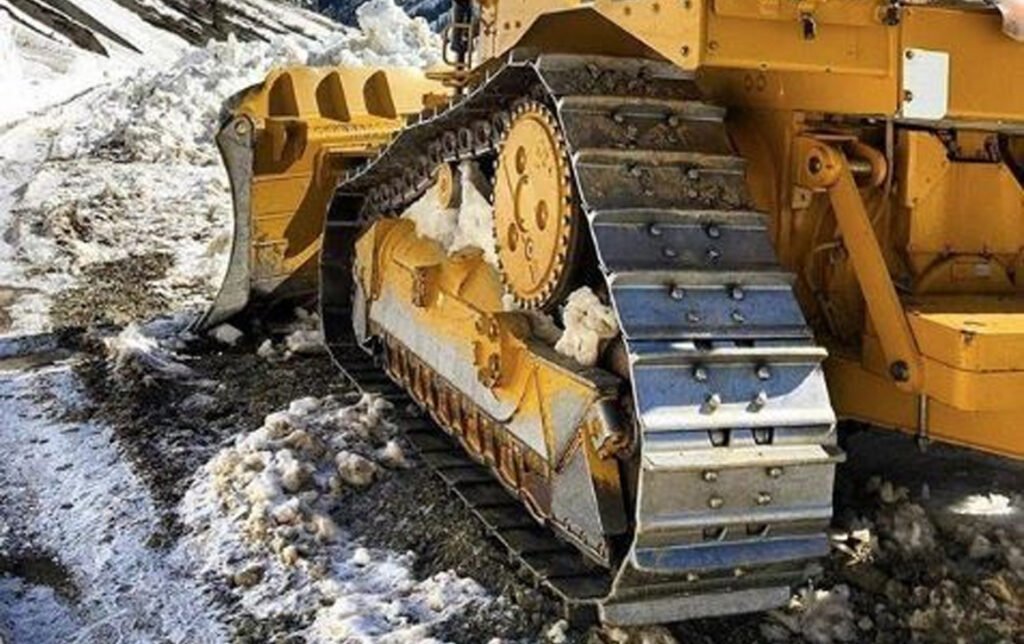
Structural Design and Technical Parameters Comparison
Beyond differences in metallurgical materials and heat treatment processes, heavy-duty جزء هيكل الحفارة are also specifically reinforced in their structural designs and internal components.
| Key Structural Reinforcements | Standard Part Design | Heavy-Duty Part Upgrade | Performance Enhancement |
| Rims & Tread Tracks | Standard wall thickness design | Rim and tread wall thickness increased by 20%–30% | Increases section modulus, effectively preventing local plastic deformation and chipping under high stress |
| Sealing & Lubrication System | Conventional rubber seal rings | Duo-Cone Seal | Seal pressure tolerance increased by 35%, preventing oil leakage and seizure in mud, sand, and extreme temperature variations |
| المسامير والبطانات | Standard diameter pins | Enlarged outer diameter pins & thickened deep carburized bushings | Tensile strength significantly increased; anti-shear fracture capability improved by أكثر من 30% |
1. Wall Thickness and Resistance to Deformation
The rims and tread wall thickness of heavy-duty track rollers, carrier rollers, and guide idlers are typically increased by 20%–30% compared to standard parts. This thickened design significantly increases the section modulus of the structure, effectively resisting localized plastic deformation under high stress and preventing roller edges from chipping or spalling under uneven forces.
2. Sealing and Lubrication System
Heavy-duty components generally adopt stricter sealing standards. GFM uses high-precision Duo-Cone Seals and premium high-temperature synthetic grease in heavy-duty undercarriage parts. This sealing structure remains stable in operating environments with large amounts of fine sand, mud, water, and extreme temperature differences, increasing seal pressure tolerance by 35% and effectively eliminating oil leakage and bearing lockup caused by mud and sand ingress.
3. Pin and Bushing Pairing
Pins and bushings in track chain assemblies are the core components determining chain life. Heavy-duty track chains adopt enlarged outer diameter pins و thickened bushings with deep carburizing heat treatment. This not only enhances the overall tensile strength of the chain but also improves anti-shear failure capability by more than 30%.
💡 الأسئلة الشائعة
Q: How to determine if a track roller has reached its wear limit?
A: Determining whether a track roller has reached its wear limit can be done by using an ultrasonic thickness gauge or specialized calipers to measure the remaining tread wall thickness of the roller, replacing it when wear reaches 100% of the manufacturer’s limit. Additionally, operators should observe if the roller rim exhibits obvious cracking or deformation contacting the track link guard plate, and check whether the shaft end experiences continuous oil leakage or abnormal binding.
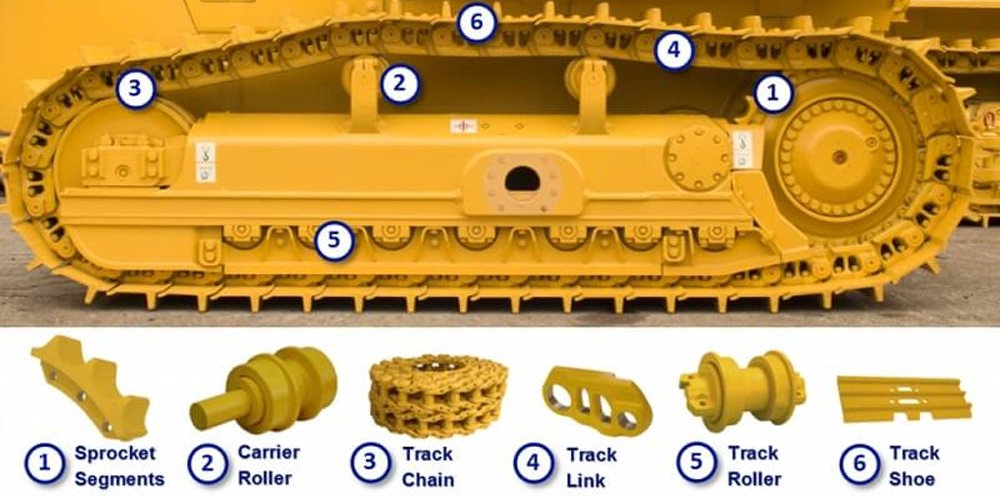
Dedicated to Undercarriage Manufacturing Since 2011
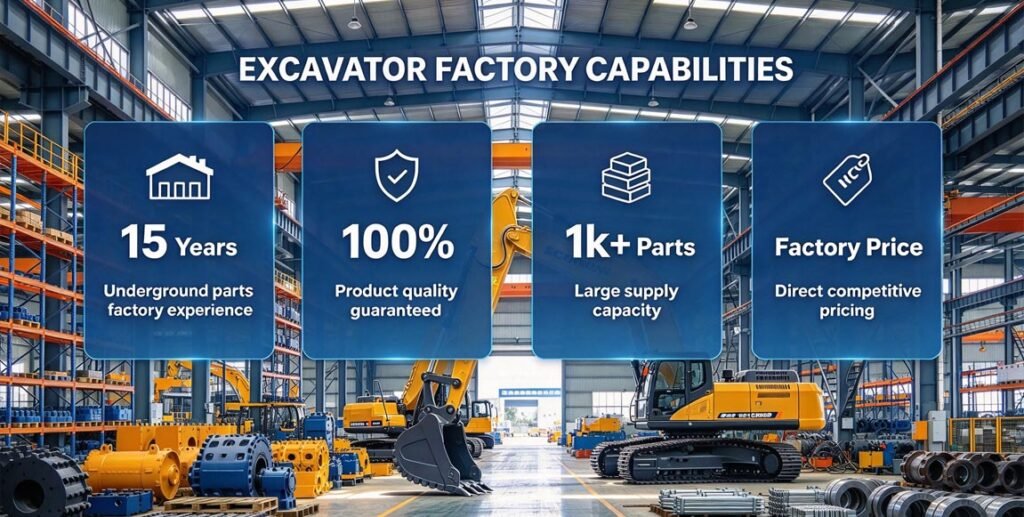
As a high-standard modern جزء هيكل الحفارة manufacturing factory, GFM has specialized in the R&D and production of excavator and bulldozer parts since 2011. Over a decade of industry expertise allows GFM to deeply understand the strict requirements of global buyers regarding product durability, delivery cycles, and dimensional accuracy.
1. Full Range of Undercarriage Parts and High Compatibility
GFM possesses a complete product line capable of providing one-stop undercarriage system solutions. Our product range covers:
- المكونات الأساسية للهيكل السفلي: Track rollers, carrier rollers, idlers, sprockets, track shoes, track links, and track assemblies.
- Matching Excavator Attachments & Hardware: High-strength buckets, bucket teeth pins, high-strength bolts and nuts, pin shafts, wear-resistant bushings, etc.
GFM products feature outstanding brand compatibility, fully matching global mainstream construction machinery brands, including Komatsu, Hitachi, Caterpillar, Volvo, Kobelco, Daewoo/Doosan, Hyundai, Kubota, Bobcat, Yanmar, SANY, LiuGong, XCMG, Shantui, and more.
2. Mature Production Lines and Bulk Customization Capabilities
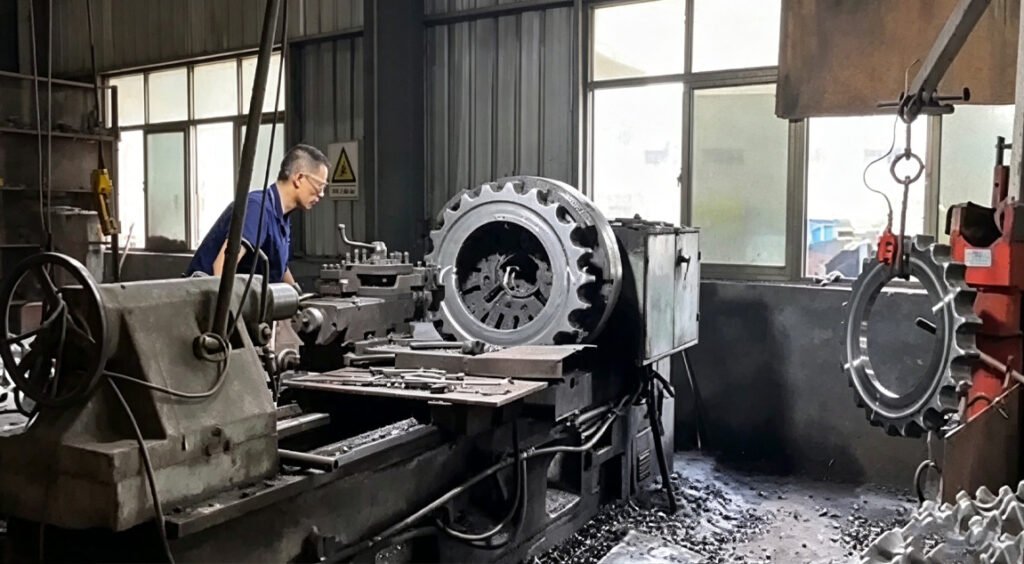
The GFM factory is equipped with modern automated production lines, featuring large CNC machining centers, precision forging equipment, and automated casting lines. Whether for fast delivery of standard models in bulk or customized (OEM/ODM) projects tailored for special mining conditions, GFM has efficient capacity response capabilities to ensure on-time delivery to domestic and international clients.
💡 الأسئلة الشائعة
Q: How does the GFM factory ensure quality consistency for bulk custom undercarriage parts?
A: GFM ensures quality consistency through standardized processes from end to end, starting from inspecting high-strength qualified steel at the procurement source down to automated CNC machining, standardized heat treatment, and 3D coordinate dimensional testing combined with hardness sampling for each batch, guaranteeing every component leaving the factory strictly complies with industry standards.
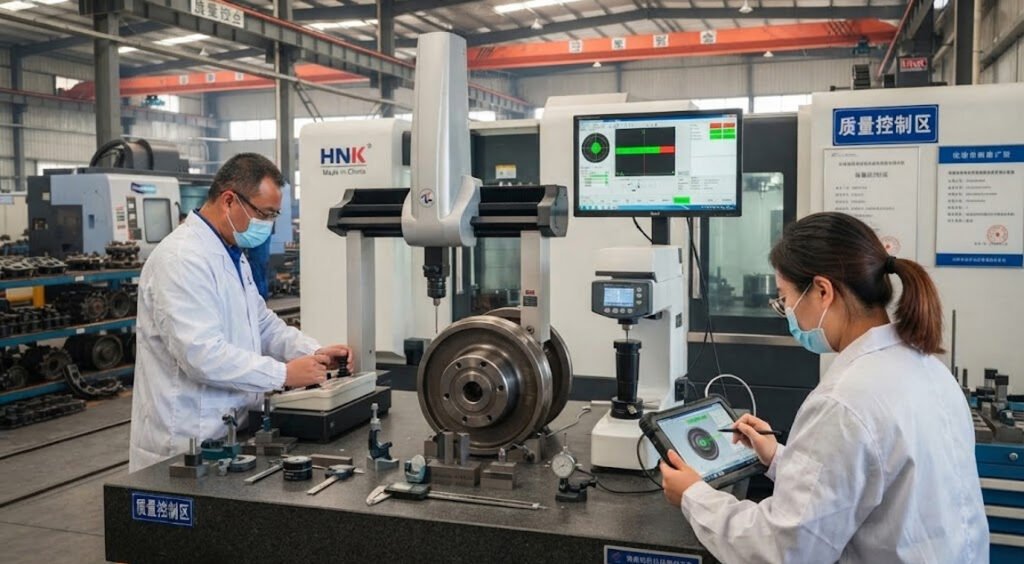
GFM Strict Craftsmanship and Warranty Services
Product quality is the foundation of GFM’s development. To ensure that every جزء هيكل الحفارة leaving the factory delivers superior performance in harsh field environments, GFM has built a comprehensive, full-process quality control system.
GFM Quality Control and Manufacturing Steps:
- اختيار المواد الخام: Strictly selecting high-strength alloy steel (such as 40Mn2, 35CrMo) from well-known steel mills like Baosteel and Ansteel.
- Precision Forming: Utilizing automated forging and high-precision casting processes to eliminate internal defects and improve grain structure.
- Heat Treatment Strengthening: Applying automated step quenching and deep tempering techniques to form a deep hardened layer with hardness reaching HRC 52–58, balancing impact toughness.
- فحص الجودة الصارم: Equipped with optical emission spectrometers, ultrasonic flaw detectors, hardness testers, and Coordinate Measuring Machines (CMM) for batch-by-batch testing.
- Quality Commitment: Manufactured products carry an official quality warranty of لا تقل عن سنة واحدة أو 2000 ساعة.
1. Premium Materials and Precision Heat Treatment
GFM selects high-strength premium alloy steel from renowned steel mills such as Baosteel and Ansteel. During manufacturing, advanced casting and forging techniques are employed to effectively eliminate internal defects and refine metal grain structures.
Subsequently, components enter the critical heat treatment phase. GFM applies automated step quenching and tempering technologies to achieve precise temperature control over both the surface and core of the components. This allows parts to obtain a high-hardness wear-resistant surface while retaining excellent interior impact toughness, thoroughly solving the industry pain point of components becoming “hard yet brittle” under heavy loads.
2. Comprehensive Testing Equipment and Quality Control
The GFM factory is equipped with complete quality testing instruments, including:
- Optical Emission Spectrometer: Strictly controlling raw material chemical composition.
- Ultrasonic Flaw Detector: Inspecting forged and cast parts for internal gas holes, cracks, or hidden flaws.
- Brinell/Rockwell Hardness Tester: Sampling batch by batch for hardened layer depth and surface hardness.
- Coordinate Measuring Machine (CMM): Ensuring critical mounting dimensions are controlled within micron-level precision.
3. Warranty Commitment of No Less Than 1 Year or 2,000 Hours
Based on strong confidence in factory manufacturing craftsmanship and product performance, GFM provides an official quality warranty period of لا تقل عن سنة واحدة أو 2000 ساعة for all undercarriage products. From contract signing to post-sales response, GFM consistently delivers solid, reliable technical support and quality assurance to global clients.
| احصل على عرض أسعار سريع ومجاني | البريد الإلكتروني: henry@gfmparts.com | واتساب: +86 17705953659 |
باعتبارنا شركة رائدة في الصناعة مورد قطع غيار الحفارات, GFM is dedicated to providing high-performance, cost-effective heavy-duty and standard undercarriage solutions for global customers. Whether you are a construction machinery dealer seeking OEM-quality replacement parts or an equipment manufacturer needing custom high-strength undercarriage parts for special operating conditions, GFM’s mature production lines and rigorous quality control system are here to support you.
If you are looking for durable and cost-effective excavator undercarriage parts, or wish to explore custom OEM collaboration, please feel free to contact our engineering team. Contact us today to get free samples and your customized quote!