Table of contents
- What Is a Bulldozer Track Roller? Basic Knowledge and Working Principle
- Main Types of Bulldozer Track Rollers
- Core Structure and Key Technical Details of Track Rollers
- Compatible Models of Track Rollers for Different Bulldozer Brands
- Why Choose GFM Bulldozer Track Rollers? Performance and Manufacturing Advantages
What Is a Bulldozer Track Roller? Basic Knowledge and Working Principle
A bulldozer track roller, also commonly referred to as a lower roller, is one of the core load-bearing components in the undercarriage system of tracked construction machinery. It is located beneath the track chain and supports and transfers the machine’s weight continuously through direct contact and rolling motion with the track links.
From a working mechanism perspective, the track roller essentially plays a dual role of “dynamic load-bearing + guiding stability.” During operation, engine power is transmitted to the track chain through the drive sprocket, while the track roller continuously carries the weight from the upper structure and distributes the load evenly to the ground through rolling motion. This structure enables bulldozers to operate stably on soft ground, muddy terrain, or complex working conditions.
Its core functions can be summarized in three aspects:
- Load-bearing function: supports the total weight of the machine (which can reach tens of tons) and distributes pressure evenly across the track system
- Guiding function: guides the track running path through flange structure to prevent deviation or derailment
- Friction reduction: replaces sliding with rolling, significantly reducing friction loss between the track and undercarriage
According to industry usage data, the working time of the track system is often more than 10 times that of the engine, and as a long-term contact component, the durability of the track roller directly determines the overall lifespan of the equipment. Therefore, understanding its structure and performance is crucial in both selection and maintenance.
Main Types of Bulldozer Track Rollers
Under different application scenarios and equipment specifications, the structural design of track rollers varies. Choosing the right type can effectively improve equipment stability and reduce maintenance costs.
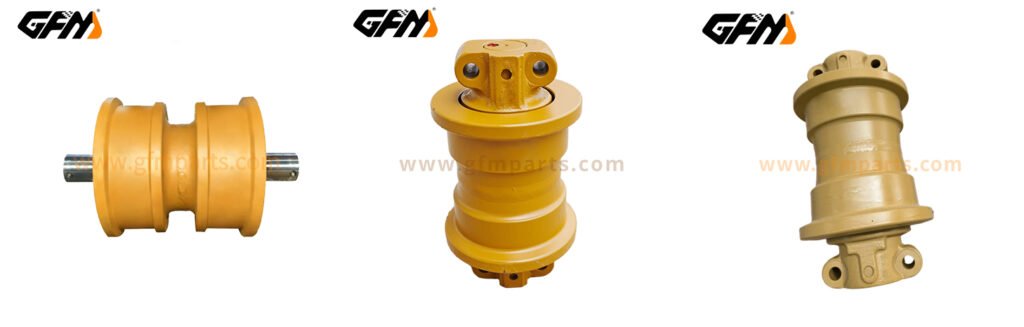
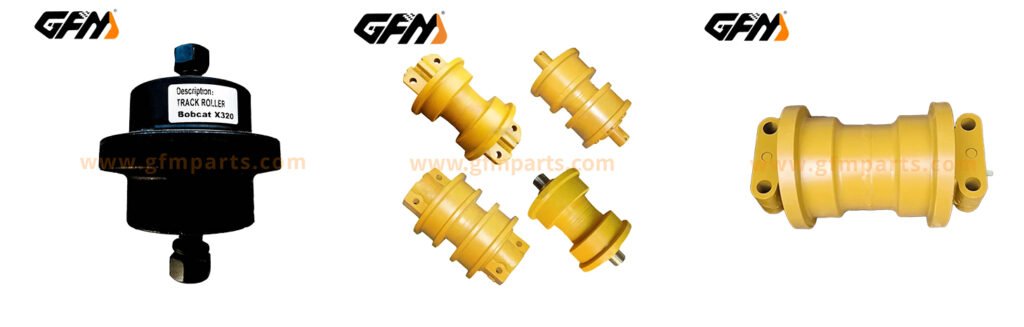
Single Flange Track Roller
A single flange roller has a guiding edge on only one side. Its advantages lie in simple structure, lighter weight, and lower manufacturing cost. This type is mostly used in light-duty equipment or specific track system designs.
However, due to its limited guiding capability, its stability is relatively weaker under complex terrain or high-load conditions, resulting in a more limited application range.
Double Flange Track Roller
The double flange roller is currently the most widely used design, with guiding edges on both sides of the roller to effectively limit lateral movement of the track. This structure is widely applied in medium and large bulldozers.
Its main advantages include stronger guiding performance, higher stability, and lower risk of track derailment. For equipment operating continuously over long periods, double flange rollers significantly improve operational reliability.
Heavy-Duty Track Roller
In high-impact working conditions such as mining and quarrying, standard rollers often cannot meet operational demands, making heavy-duty designs necessary. These rollers typically feature thicker roller bodies, higher-strength materials, and reinforced bearing systems.
Based on practical engineering experience, heavy-duty rollers can achieve a lifespan improvement of 30%–50% compared to standard rollers under extreme conditions, showing clear advantages in high-load environments.
Sealed Track Roller
Sealed track rollers are standard in modern construction machinery, using floating oil seals (Duo Cone Seal) internally to effectively prevent mud, water, and dust from entering.
In muddy or high-humidity environments, the performance of the sealing system directly determines the roller lifespan. In practice, high-quality sealed rollers can achieve a service life of over 4000–6000 hours.
Core Structure and Key Technical Details of Track Rollers
To determine whether a track roller manufacturer is professional, the key lies in its ability to control structural details. Although the appearance of a track roller is simple, its internal structure and manufacturing process requirements are extremely high.
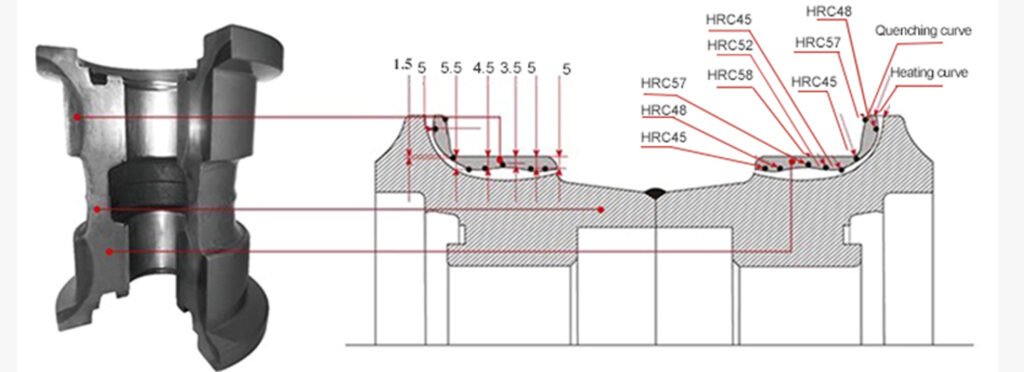
Roller Shell
The roller shell is the part that directly contacts the track and is usually made of high-strength alloy steel such as 50Mn or 40Mn2. Through medium-frequency induction hardening or overall heat treatment, its surface hardness can reach HRC52–58 while maintaining good toughness.
This “hard exterior, tough interior” design ensures wear resistance while preventing brittle fracture.
Shaft
The shaft is the core component that supports the entire roller structure and bears continuous pressure from the machine. It is usually treated with quenching and tempering processes to achieve high strength and fatigue resistance.
A high-quality shaft can remain stable under long-term high-load operation without deformation or fracture.
Bearing System
Modern track rollers typically use rolling bearings. Compared to plain bearings, they offer stronger load capacity and lower friction coefficients.
In high-end products, reinforced bearing designs are also adopted to withstand impact loads under extreme working conditions.
Sealing System
The floating oil seal (Duo Cone Seal) is the industry standard, forming a sealing interface through two metal rings and elastic components to effectively isolate external contaminants.
The reliability of the sealing system directly determines whether internal lubrication can remain stable over time, making it a key indicator for evaluating product quality.
Lubrication System
Track rollers are typically filled with high-performance lubricating oil or grease to reduce friction and heat buildup. A high-quality lubrication system can extend bearing life and reduce operational resistance.
Compatible Models of Track Rollers for Different Bulldozer Brands
The selection of track rollers must closely match the equipment model; otherwise, it may not only affect performance but also lead to abnormal wear or even equipment failure.
The following are common compatible models for mainstream brands:
- Komatsu: D31, D41, D65, D85, D155 series, which are widely used in global engineering projects and have high durability requirements for track rollers.
- Caterpillar: D3, D5, D6, D7, D8 models, which are mainstream equipment in the international construction machinery market with strict roller standards.
- Hitachi: EX series undercarriage systems, which feature more precise track structure designs and require higher dimensional accuracy for rollers.
- Shantui: SD16, SD22, SD32 models, which have a large installed base in both domestic and international markets.
Why Choose GFM Bulldozer Track Rollers? Performance and Manufacturing Advantages
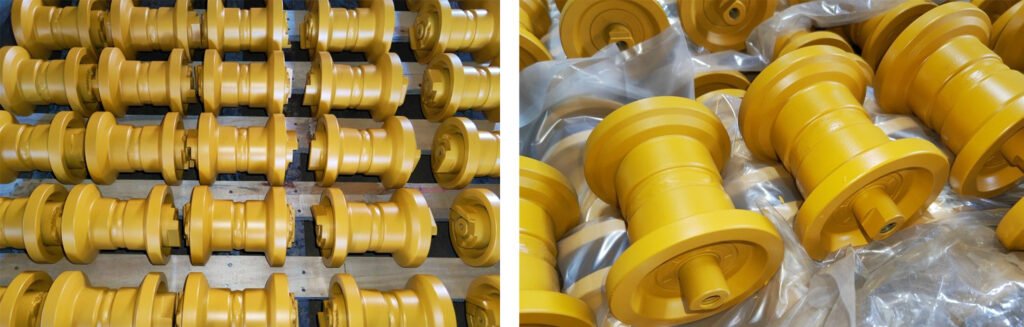
When selecting a bulldozer track roller, the manufacturing capability and quality stability of the supplier are often more critical than price. As a professional track roller manufacturer with 15 years of industry experience, GFM has developed a mature system in material selection, structural design, and manufacturing processes, providing stable and reliable track roller solutions under high-load and complex working conditions.
- 15 Years of Experience: Since 2011, GFM has focused on undercarriage manufacturing, accumulating long-term experience in mining, earthmoving, and complex working conditions. This ensures stable performance in wear resistance, impact resistance, and product consistency, effectively reducing equipment failure rates and maintenance uncertainties.
- High-Strength Materials: By using high-quality alloy steel combined with forging or precision casting processes, and through quenching and tempering treatment, GFM achieves a balance between high surface hardness and internal toughness. This allows track rollers to maintain wear resistance and crack resistance under high impact and continuous load, with a significantly longer service life than standard products.
- Strict Quality Control: With a comprehensive processing and inspection system, GFM controls dimensional accuracy, hardness, sealing, and load performance throughout the entire process, ensuring consistent product quality and providing a warranty of no less than one year or 2000 hours to reduce operational risks.
- Efficient Sealing: The use of floating oil seals effectively prevents sand, dust, and water from entering the internal system while maintaining stable lubrication, reducing bearing wear and significantly extending service life in harsh environments.
- Stable Supply: With mature production lines and inventory systems, GFM can quickly respond to bulk demand and provide multiple specifications, reducing downtime caused by parts shortages and ensuring continuous project operation.
- Wide Compatibility: Products are compatible with mainstream equipment from Komatsu, Caterpillar, Hitachi, and Shantui, and support OEM customization to ensure matching accuracy and operational stability across different models.
- Factory Direct Supply: Through factory-direct supply, intermediate costs are reduced, offering more competitive pricing while maintaining stable quality, helping customers optimize long-term procurement costs and supply reliability.
| Get a quick free quote | Email: henry@gfmparts.com | Whatsapp: +86 17705953659 |
As a key component of the bulldozer undercarriage system, the performance of the track roller directly affects equipment stability and maintenance costs. From type selection to structural understanding and compatibility matching, every step impacts long-term equipment performance.
Choosing high-quality bulldozer track roller products not only improves equipment efficiency but also significantly reduces failure rates and downtime. In long-term operations, establishing stable cooperation with a reliable track roller manufacturer is an important guarantee for achieving cost control and efficient equipment operation.