Table of contents
- Fundamental Differences Between Mining and Earthmoving Conditions
- Core Differences in Excavator Parts Selection: Structure, Material, and Usage Cost
- How to Choose the Right Excavator Parts
- How GFM Meets Parts Requirements for Different Conditions Through Standardized Manufacturing
- Common Selection Mistakes and Real-World Case Analysis
Fundamental Differences Between Mining and Earthmoving Conditions
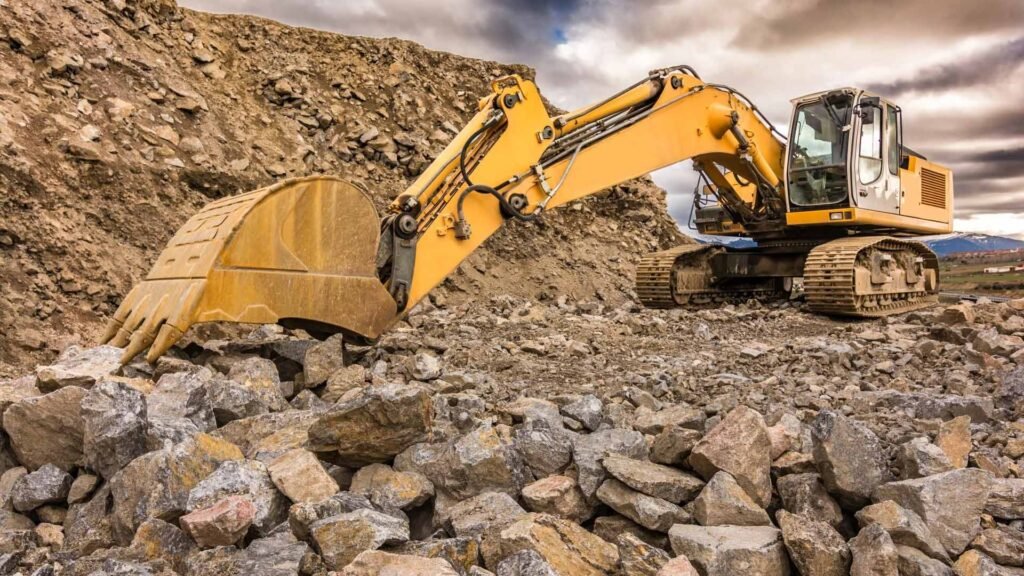
From an engineering application perspective, mining conditions and earthmoving conditions are not simply a matter of “heavy load versus light load,” but involve systematic differences in work material, load types, and equipment operating rhythm.
Typical characteristics of mining conditions include:
- High hardness of work material, mostly granite, basalt, iron ore, or blasted rock mixtures
- Sharp-edged material generating significant cutting and impact on buckets and teeth
- Continuous operation, with excavators under high load or near their limit for extended periods
In contrast, earthmoving conditions tend to be more stable and uniform:
- Work material mostly clay, sand, backfill, or medium- to low-strength soil
- Load process relatively smooth, with fewer impact loads compared to mining
- Work rhythm has intervals, allowing equipment to operate in low to medium load zones
These differences determine that excavator parts wear patterns, failure modes, and lifespan vary by condition, directly influencing subsequent selection decisions.
Core Differences in Excavator Parts Selection: Structure, Material, and Usage Cost
Translating mining and earthmoving conditions into specific parts selection, the core focus is not on a single parameter but on structural design, material performance, and the resulting life-cycle cost. The table below systematically compares selection priorities for the two conditions from an engineering perspective.
| Selection Dimension | Mining Conditions | Earthmoving Conditions |
|---|---|---|
| Work Material | High hardness rock, sharp edges | Clay, sand, uniform material |
| Main Load Type | High-frequency impact load | Long-term cyclic load |
| Common Failure Modes | Chipping, fracture, local structural damage | Wear, fatigue, increased clearances |
| Structural Focus | Reinforce high-stress areas, reduce stress concentration | Control weight, ensure fit stability |
| Material Focus | Emphasize impact toughness to avoid brittle failure | Balance wear resistance and fatigue life |
| Hardness Logic | Moderate hardness, avoid “hard but brittle” | Medium hardness, stable wear |
| Replacement Strategy | Avoid sudden failure, pursue high reliability | Scheduled replacement, predictable |
| Cost Focus | Life-cycle cost prioritized | Balance purchase cost and service life |
It is clear that mining conditions focus on “cannot fail,” while earthmoving conditions focus on “long-lasting and predictable.” This is why a mature excavator part factory often validates designs against typical working conditions rather than pursuing a single extreme performance metric.

How to Choose the Right Excavator Parts
Once the differences in structure, material, and life-cycle cost are clear, the engineering value lies in translating these differences into clear, actionable selection logic. The following principles apply to field engineers, equipment managers, and procurement decision-makers:
- Use working conditions as the primary criterion, not just equipment model: The same excavator model may require completely different parts for mining versus earthmoving. Analyze work material, impact frequency, and continuous operation time first.
- Avoid single-performance-driven selection: Overemphasizing hardness or extreme wear resistance can cause brittle failure or abnormal damage. Proper selection balances strength, toughness, and wear rate.
- Include replacement frequency and downtime risk in cost evaluation: Part price is only the explicit cost; maintenance time, downtime losses, and replacement schedule matter more. In high-intensity conditions, predictable durability is often more valuable than low initial cost.
- Prioritize standardized parts with mature specifications and stable supply: For high-consumption components, long-term replaceability and batch consistency help ensure continuous operation and reduce maintenance uncertainty.
- Combine on-site inventory and maintenance capability for final decisions: When maintenance windows are limited, prioritize high-reliability, consistent-quality parts to minimize unplanned downtime.

How GFM Meets Parts Requirements for Different Conditions Through Standardized Manufacturing
In diverse construction environments such as mining and earthmoving, parts reliability comes from stable, repeatable manufacturing rather than frequent design changes. Since 2011, GFM has specialized in excavator and bulldozer parts manufacturing, using a mature standardized production system to provide long-term, reliable support for different working conditions.
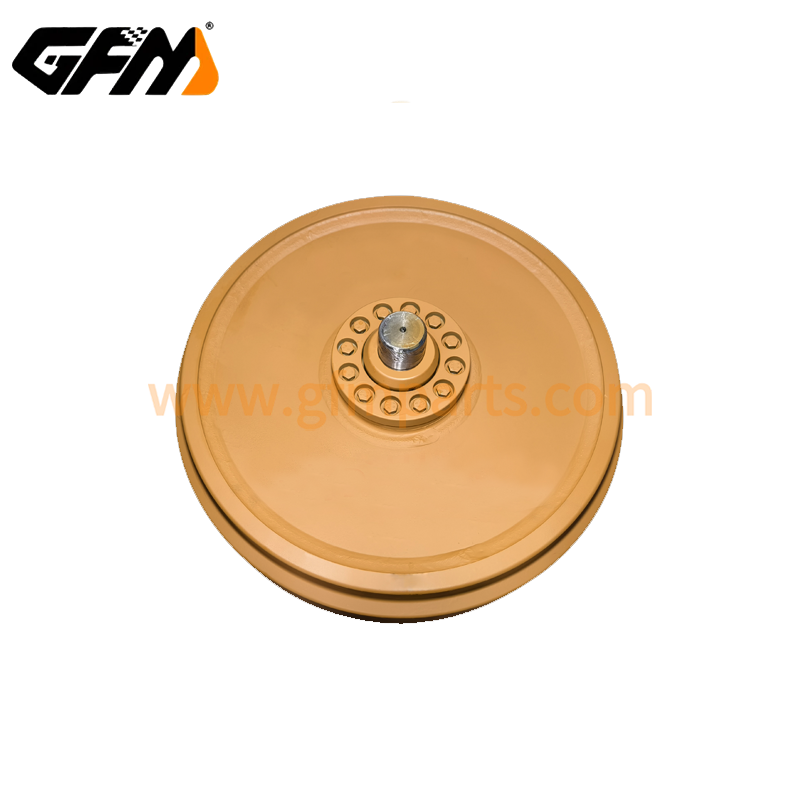
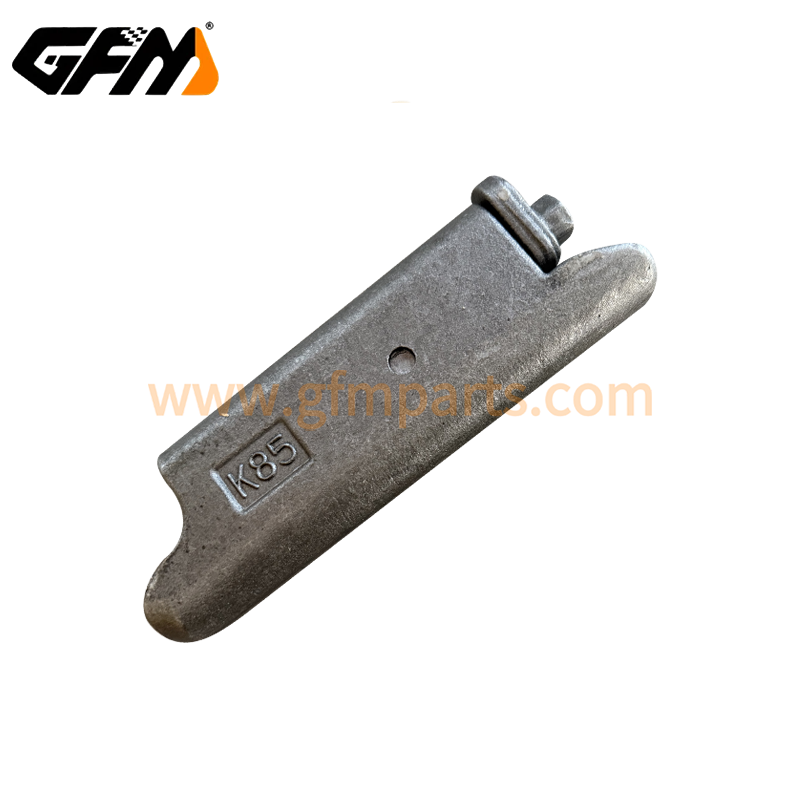
- Establishing a standardized product system around mainstream models: GFM products cover carrier rollers, idlers, track rollers, sprockets, track shoes, track chains, track assemblies, as well as bolts, nuts, pins, and bushings. The system is centered on mainstream market specifications to ensure compatibility under mining and earthmoving conditions.
- Fixed material grades and mature process routes: By selecting proper casting or forging processes and systematic heat treatment, durability, strength, and toughness are consistently balanced, allowing parts to withstand both impact loads and continuous rolling loads in complex environments.
- Consistency-oriented quality control system: Standardized manufacturing helps control batch variation and provides a quality guarantee of no less than one year or 2000 hours, which is critical in high-downtime-cost mining applications.
- Stable delivery through scalable production and inventory support: With mature production lines and ample inventory, GFM continuously provides complete specifications and stable lead times, reducing uncertainty in project maintenance.
This standardization-centered approach is the foundation that enables a professional excavator parts manufacturer to serve multiple working conditions over the long term.

Common Selection Mistakes and Real-World Case Analysis
In practice, premature failure of excavator parts is often not due to manufacturing quality alone but results from a mismatch between selection logic and real working conditions. Load type, impact intensity, and wear mechanisms vary significantly; a wrong decision can cause parts to fail unexpectedly even if they initially function properly.
- Mistake 1: Pursuing high hardness in mining conditions
In mining, high hardness is often considered key to wear resistance, but cases show that insufficient material toughness can amplify impact risks. Under repeated impacts from blasted rock and sharp-edged material, parts are prone to chipping, microcrack propagation, or sudden fracture. This failure mode is abrupt, not gradual, significantly affecting continuous operation. - Mistake 2: Ignoring fatigue wear in earthmoving conditions
Earthmoving may have lower single loads, but long-term cyclic stress affects parts cumulatively. If structural design or dimensional stability is insufficient, clearances gradually increase and operational precision decreases over time, subtly reducing efficiency and stability. - Mistake 3: Comparing only unit price and ignoring downtime cost
Purchasing decisions based solely on part price are common. In high-load or continuous operation, low-cost parts that require frequent replacement increase labor and maintenance costs and may cause unplanned downtime. Over the life cycle, they often cost more than initially higher-priced but more stable solutions.
| Get a quick free quote | Email: henry@gfmparts.com | Whatsapp: +86 17705953659 |
The differences between mining and earthmoving conditions mean that there is no universal answer for excavator parts selection. Only by considering structural design, material performance, and life-cycle cost—and aligning with actual working conditions—can long-term equipment stability be achieved.
By applying scientific selection logic and choosing a excavator part factory and excavator parts manufacturer with stable manufacturing capabilities, projects can reduce maintenance risk and achieve more controllable, efficient equipment management over time.