
Principais conclusões
- As condições de trabalho determinam a vida útil.Em ambientes de alto impacto e desgaste severo na mineração e construção pesada, os dentes da caçamba precisam possuir ambas as características. alta resistência ao impacto e elevada dureza superficial..
- Requisitos do Processo PrincipalAlta qualidade dentes da caçamba da escavadeira deve utilizar aço-liga de alta resistência, passar por fundição/forjamento de precisão e tratamento térmico de têmpera profunda Para evitar quebras prematuras e desgaste anormal.
- A correspondência por seleção é crucial.A escolha correta de formatos de dentes para penetração em rocha, para serviço pesado ou padrão, com base em diferentes geologias como granito, cascalho ou argila, é fundamental para melhorar a eficiência da escavação e reduzir os custos operacionais por hora.
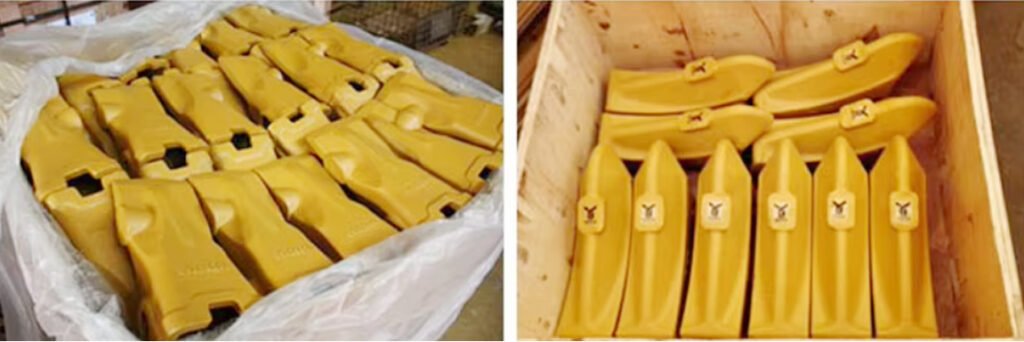
- Força de Fabricação da GFMDesde a sua fundação em 2011A GFM tem se concentrado na pesquisa e desenvolvimento e na produção de dentes de caçamba de alta resistência ao desgaste, equipados com linhas de produção automatizadas e sistemas de teste rigorosos.
- Qualidade e total compatibilidade com a marcaOs dentes da caçamba GFM são totalmente compatíveis com Mais de 15 marcas tradicionais incluindo Komatsu, Caterpillar, Hitachi e SANY, e oferecem uma garantia de qualidade de no mínimo 1 ano ou 2.000 horas.
Em atividades de mineração de alta intensidade e construção pesada, os dentes da caçamba da escavadeira são as peças de desgaste frontais em contato direto com o solo e as rochas. Escolher um profissional é fundamental. fornecedor de dentes para caçambas para adquirir alta qualidade dentes da caçamba da escavadeira Pode prevenir diretamente paradas não programadas causadas por quebra de dentes, melhorar significativamente a eficiência de carregamento da caçamba e reduzir o consumo geral de diesel e os custos de manutenção do equipamento. Desde a sua fundação em 2011A GFM tem se dedicado a fornecer aos parceiros globais de aquisição dos setores de mineração e construção soluções em dentes de caçamba que apresentam alta resistência ao desgaste, forte resistência ao impacto e compatibilidade precisa.
Requisitos para dentes de caçamba em engenharia de mineração e construção
As condições geológicas em locais de mineração e construção são extremamente complexas, submetendo os dentes da caçamba da escavadeira a imensas tensões mecânicas e atrito durante a operação. Seja enfrentando granito extremamente duro, areia de quartzo altamente abrasiva ou solo úmido e pegajoso, o desempenho dos dentes da caçamba determina diretamente o progresso do trabalho da escavadeira.
Em condições de trabalho pesado, dentes de caçamba de qualidade inferior ou selecionados incorretamente geralmente apresentam dois modos principais de falha: abrasão de alta tensão e fratura de impactoQuando a caçamba corta minério duro, a ponta do dente suporta uma pressão pontual extremamente alta. Se a resistência do material for insuficiente, a ponta perderá o fio rapidamente ou sofrerá deformação plástica. Em operações de escavação de rochas ou de limpeza de minério após detonação, fortes forças de impacto podem facilmente fazer com que dentes de caçamba com defeito interno se quebrem diretamente na base.
Portanto, os melhores dentes de caçamba para mineração e construção devem atingir um equilíbrio físico perfeito entre resistência ao desgaste (dureza) e resistência ao impacto (Resistência)Os profissionais de compras que avaliam dentes de caçamba não devem se concentrar apenas no preço unitário, mas priorizar sua vida útil completa e eficiência de penetração em condições de trabalho específicas.
💡 Perguntas Frequentes
P: Como selecionar os dentes de caçamba adequados para escavadeiras em condições de mineração e pedreiras?
A: Priorize a dureza do material e a geometria dos dentes. Para rochas duras, escolha dentes de alta resistência. penetração em rocha (RP) ou serviço pesado (HD) Dentes com liga de cromo-molibdênio; para cascalho abrasivo, selecione dentes HD espessos. Certifique-se de que os dentes passem por têmpera e revenido completos para obter o resultado desejado. HRC 48-52 dureza superficial.
Análise de tensões nos dentes da caçamba e mecanismo antidesgaste/antiquebra
Para entender por que os dentes da caçamba falham rapidamente sob condições específicas, é necessário analisar seu estado de tensão durante a operação, sob as perspectivas da mecânica e da ciência dos materiais. Quando o cilindro da escavadeira empurra a caçamba contra a camada rochosa, os dentes da caçamba são os principais responsáveis por suportar o peso. tensão compressiva axial, força de cisalhamento tangencial e força de torção lateral.
| Região Estrutural | Requisito de desempenho principal | Índice de Parâmetros Técnicos | Função principal e mecanismo de proteção |
| Área da ponta do dente (Ponta) | Alta dureza superficial | HRC 48-52 | Resiste a cortes e arranhões causados por partículas altamente abrasivas de quartzo e minerais, mantendo a capacidade de autoafiação. |
| Corpo e cavidade do dente | Alta resistência a impactos | Energia Absorvida pelo Impacto AKV > 25 J | Absorve a energia de impacto de grandes blocos de rocha, protegendo o adaptador e o pino contra quebras. |
Para evitar a quebra catastrófica dos dentes da caçamba sob impacto severo, dentes de caçamba de qualidade devem apresentar um desempenho estrutural e organizacional que combine "exterior duro e interior resistente". Além disso, o design autoafiável dos dentes da caçamba é fundamental para a eficiência. Dentes de caçamba de alta qualidade mantêm uma aresta de penetração relativamente afiada durante o desgaste abrasivo, reduzindo assim a resistência ao corte da escavadeira e diminuindo a carga do motor e o consumo de combustível.
💡 Perguntas Frequentes
P: Qual parte do dente da caçamba de uma escavadeira é mais propensa a quebrar e como isso pode ser evitado?
A: A quebra geralmente ocorre no área da raiz/bolsa e próximo ao furo do pino. Para evitar isso, escolha aço-liga com alta energia de impacto. AKV > 25 JUtilize tratamento térmico para alívio de tensão e mantenha a tolerância de ajuste dentro dos limites. ±0,5 mm Eliminar as lacunas de impacto destrutivo.
Aumento da vida útil dos dentes da caçamba
Os materiais de fabricação e o processo de tratamento térmico dos dentes da caçamba são fatores decisivos em sua resistência ao desgaste e vida útil. dentes da caçamba da escavadeira As peças disponíveis no mercado dividem-se principalmente em peças fundidas e peças forjadas. Independentemente do método de conformação, a formulação da composição química do aço-liga de alta qualidade e a tecnologia de tratamento térmico são os principais segredos.
- Cromo (Cr)Melhora significativamente a temperabilidade e a resistência ao desgaste abrasivo do aço.
- Molibdênio (Mo)Aumenta a resistência a altas temperaturas e a resistência ao revenimento do material, evitando que os dentes da caçamba percam dureza devido à geração de calor por atrito em alta velocidade.
- Níquel (Ni)Aumenta substancialmente a resistência ao impacto em baixas temperaturas da liga, reduzindo o risco de fratura frágil a frio em ambientes de mineração com temperaturas baixas.
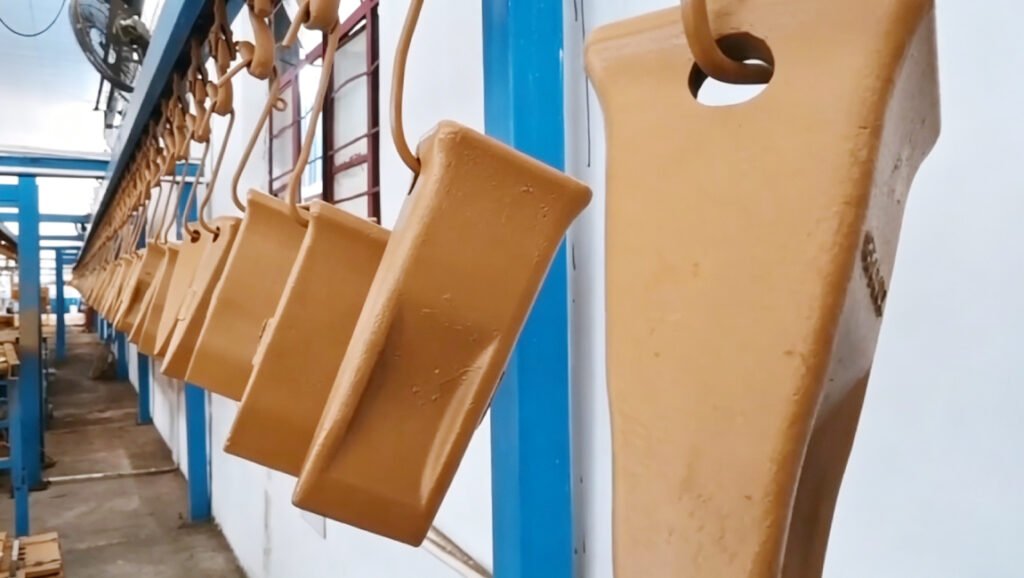
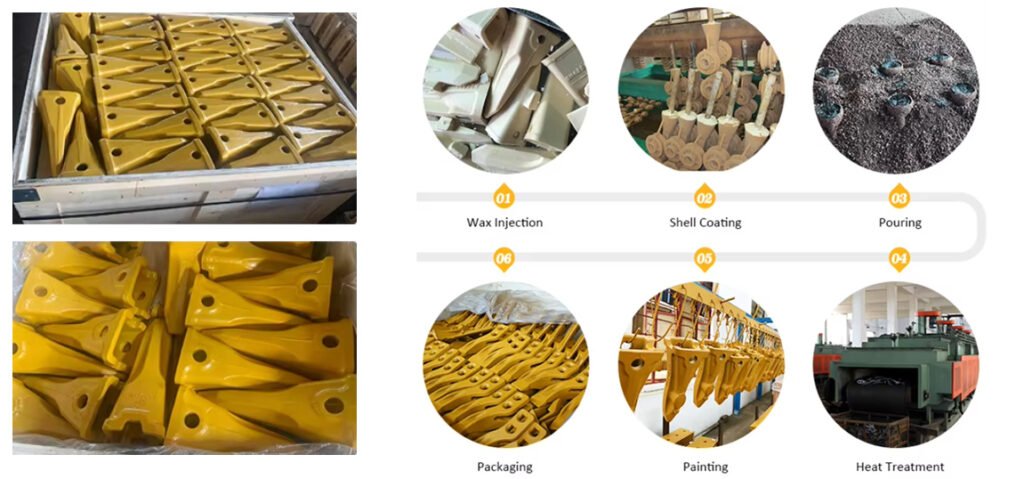
Dentes de caçamba não tratados ou com tratamento térmico incompleto apresentam estruturas metalográficas internas grosseiras e resistência ao desgaste extremamente baixa. A GFM utiliza linhas de produção de tratamento térmico totalmente automatizadas e controladas por computador:
| Etapa de tratamento térmico | Condições de controle do processo | Estrutura e desempenho metalográficos |
| Aquecimento geral | Controlado com precisão em 880°C – 920°C | Garante a completa dissolução e austenitização dos elementos de liga, eliminando as tensões residuais de fundição/forjamento. |
| Tratamento de têmpera | Circulação de fluido de resfriamento rápido (têmpera em água/óleo) | Forma um material de alta dureza e alta resistência ao desgaste. martensita de lâminas finas estrutura. |
| Revenimento em Alta Temperatura | Baixa temperatura 200°C – 250°C para aliviar o estresse | Obtém bom martensita temperada, melhorando significativamente a resistência ao impacto e a ductilidade. |
Por meio de têmpera e revenimento científicos, a dureza metalográfica geral dos dentes da caçamba GFM permanece altamente uniforme da superfície ao núcleo, prevenindo eficazmente o fenômeno de "desgaste acelerado" durante o uso intermediário.
💡 Perguntas Frequentes
P: Qual a diferença na resistência ao desgaste entre dentes de caçamba forjados e fundidos?
A: Oferta de dentes forjados maior resistência ao impacto e à fratura Graças à sua estrutura granular de alta densidade, é ideal para escavação extrema em rocha. Os dentes fundidos com precisão apresentam facilmente perfis complexos de autoafiação, oferecendo alta relação custo-benefício para construção em geral.
Seleção precisa de dentes para diferentes condições de mineração e construção.
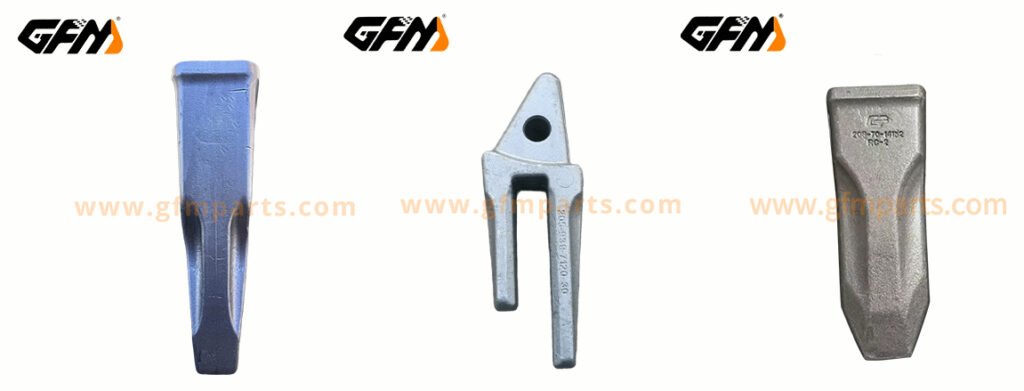
Na prática, nenhum formato de dente isolado consegue lidar perfeitamente com todas as condições de trabalho. Escolher um perfil de dente adequado às condições geológicas é fundamental para alcançar a máxima eficiência na escavação.
| Categoria Dentária | Características estruturais | Condições de trabalho recomendadas | Vantagem principal |
| Tipo Universal Padrão (Padrão/RC) | Ponta plana, estrutura geral simétrica | Terraplenagem para construção, argila, areia comum e cascalho. | Baixa resistência à penetração, econômico e prático, altíssima relação custo-benefício. |
| Tipo resistente ao desgaste para serviço pesado (Heavy Duty/HD) | Fundo mais espesso, maior volume de material utilizável | Minas a céu aberto, arenito altamente abrasivo, carregamento de cascalho | Aumenta significativamente o volume de metal utilizável, prolongando a vida útil em 30% |
| Tipo de penetração em rocha (Penetração em rocha/RP) | Estrutura de ponta afiada em forma de agulha ou em forma de V | Rocha dura, depósitos de minério não detonados, escavação em solo congelado | Concentra a pressão da carga pontual, proporcionando uma força de corte e quebra de rochas extremamente alta. |
| Tipo Tigre / Tigre Gêmeo (Tigre/Tigre Gêmeo) | Duas estruturas dentárias pontiagudas independentes | Xisto cimentado compacto, rocha intemperizada, escavação de trincheiras | Arranca com força o solo duro, impedindo que o balde fique preso durante a entrada. |
Dica práticaDurante a escavação da mina, recomenda-se a instalação de Dentes de tigre nas duas bordas externas do balde para cortar as paredes laterais, e dentes HD para serviço pesado no centro para resistir ao desgaste intenso. Esse esquema de seleção combinado pode estender significativamente o ciclo de substituição de todo o conjunto de dentes da caçamba.
💡 Perguntas Frequentes
P: Como é possível prolongar a vida útil total dos dentes da caçamba em operações de mineração a céu aberto?
A: Use um estratégia de seleção mista (Dentes de tigre nas bordas, dentes HD no centro), inspecione e substitua pinos/buchas desgastados imediatamente e escolha dentes com Liga Cr-Mo conteúdo alcançando HRC 48-52 dureza.
Vantagens da fabricação de dentes de caçamba de alta qualidade da GFM
Selecionando um fornecedor de dentes para caçambas Com capacidade de produção independente e um sistema rigoroso de controle de qualidade, é fundamental garantir a estabilidade da cadeia de suprimentos e a qualidade do produto. Como fabricante experiente, GFM se especializou na produção de peças para escavadeiras e tratores de esteira desde 2011, acumulando vasta experiência no setor em P&D e fabricação em massa de dentes de caçamba e pinos correspondentes.
1. Linhas de produção avançadas de fundição e forjamento
- Linha de fundição de precisãoUtiliza tecnologia de fundição de precisão em compósito de sílica sol/vidro solúvel, controlando as tolerâncias dimensionais dos dentes dentro de ±0,5 mm, garantindo um encaixe perfeito e firme com o adaptador para evitar que os pinos de travamento se quebrem devido a folgas excessivas.
- Linha de forjamento pesadoEquipada com prensas de forjamento de grande tonelagem, o processo de forjamento aumenta significativamente a densidade interna do metal, eliminando a porosidade interna e os defeitos de contração presentes na fundição, aumentando a resistência ao impacto. mais de 30%.
2. Sistema de Inspeção de Qualidade Rigoroso em Todo o Processo
| Link de inspeção | Equipamento/Instrumento Utilizado | Padrão e objetivo do controle de qualidade |
| Inspeção de Matéria-Prima Recebida | Espectrômetro de leitura direta | Analisa a composição química do aço fundido antes do vazamento, garantindo que os teores de Cr, Mo, Ni e outros elementos de liga estejam corretos. 100% até o padrão. |
| Amostragem de dureza e metalográfica | Testador de dureza Rockwell e microscópio metalográfico | Mede a dureza na ponta e no corpo do dente (HRC 48-52), confirmando a distribuição uniforme da estrutura martensítica interna. |
| Testes internos não destrutivos | Teste ultrassônico (UT) | O aço 100% elimina fissuras internas, cavidades de contração e defeitos de porosidade para garantir um bom desempenho em impactos. |
3. Compatibilidade total com a marca e capacidade de entrega de grandes lotes.
O dentes da caçamba da escavadeira Os pinos, parafusos e buchas correspondentes produzidos pela GFM apresentam uma cobertura de especificações extremamente alta, sendo totalmente compatíveis com as principais marcas de equipamentos do mercado:
Marcas totalmente compatíveis: Komatsu, Hitachi, Caterpillar, Volvo, Kobelco, Daewoo/Doosan, Hyundai, Kubota, Bobcat, Yanmar, SANY, LiuGong, XCMG, Shantui, etc.
Seja para peças padrão ou necessidades personalizadas para projetos de mineração específicos, as linhas de produção abrangentes da GFM garantem processamento preciso e entrega pontual de grandes lotes de pedidos. Ao mesmo tempo, a GFM oferece um período de garantia de qualidade de não menos que um ano ou 2.000 horas para todos os seus produtos de dentes de balde, eliminando completamente as preocupações dos compradores.
💡 Perguntas Frequentes
P: Os dentes da caçamba GFM são compatíveis com os equipamentos Komatsu e Caterpillar? Qual é a garantia oferecida?
A: Sim. Os dentes da GFM são fabricados de acordo com as dimensões exatas do fabricante original. Totalmente compatível com mais de 15 grandes marcas. incluindo Caterpillar, Komatsu e Hitachi. Todos os dentes são apoiados por um 1 ano ou 2.000 horas Garantia contra defeitos de fabricação e de material.
| Obtenha um orçamento rápido e gratuito | E-mail: henry@gfmparts.com | Whatsapp: +86 17705953659 |
Na engenharia de mineração e construção pesada, dentes de caçamba de alta qualidade são um elemento fundamental para aumentar a eficiência da escavação e cumprir os cronogramas do projeto. Escolher dentes de caçamba adequados é essencial. GFM como seu contato de confiança fornecedor de dentes para caçambas Significa que você obtém não apenas alta resistência, alta resistência ao desgaste e compatibilidade precisa, mas também um produto com alta precisão. dentes da caçamba da escavadeira, mas também obter suporte técnico profissional de um fabricante dedicado a peças para máquinas pesadas, já que 2011, apoiado por uma sólida 1 ano/2.000 horas Compromisso com a qualidade.
Se você busca dentes de caçamba com excelente custo-benefício, fornecimento estável em grandes lotes e capacidade de suportar condições severas de mineração:Entre em contato com a equipe técnica sênior da GFM. Para obter o catálogo eletrônico de produtos mais recente, tabelas exclusivas de compatibilidade e orçamentos competitivos para compras no atacado!