Table of contents
Understanding the Basics of Track Shoes and Sprocket Bolts
In the operation of excavators and bulldozers, the track system is a core component that ensures overall stability and traction. Among them, track shoes and track shoe bolts and nuts serve as key parts for bearing and connecting forces, and their quality and design directly affect the efficiency and safety of the equipment.
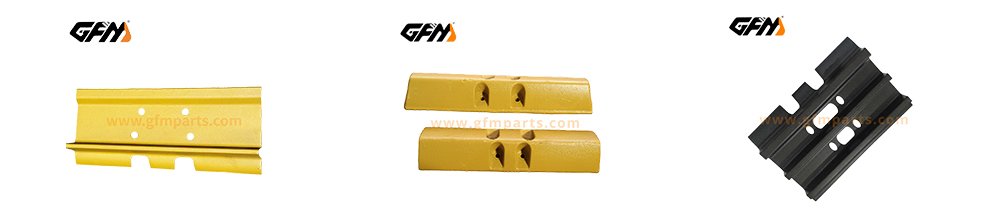
- Types and Materials of Track Shoes: Track shoes mainly include standard steel track shoes, reinforced track shoes, and widened track shoes. Standard steel track shoes are suitable for general construction environments, such as earthwork and light rocky ground; reinforced track shoes are suitable for rocky or high-intensity work environments, with thickened steel plates and high wear-resistant alloy steel to extend service life; widened track shoes are used for large load-bearing and stable travel requirements, such as large graders or bulldozers. GFM, as a professional track shoe manufacturers, usually uses alloy wear-resistant steel (Hardox 450/500 or Q345 + heat treatment process) in track shoe manufacturing, ensuring hardness reaches HRC 38–45 while maintaining toughness, reducing the risk of breakage during use.
- Function and Types of Sprocket Bolts: The main function of sprocket bolts is to firmly secure the track shoes to the track chain links while withstanding the torque and impact generated during equipment operation. Bolt types include hex bolts, bolts with locking washers, and high-strength alloy bolts, and different machinery models have strict requirements for bolt specifications. Improper use or low-quality bolts can easily cause bolts to loosen, track shoes to fall off, or even lead to equipment downtime accidents.
- Importance of Choosing the Right Parts: Selecting the right track shoes and sprocket bolts not only ensures normal equipment operation but also extends the service life of the machine. According to ISO 898-1 standards, high-strength steel bolts should have a tensile strength of 8.8 or above, and the thickness, material, and hardness of track shoes must match the equipment model and working environment.
How to Choose the Right Track Shoes and Sprocket Bolts
When choosing track shoes and sprocket bolts, factors such as working environment, machine model, load capacity, and part certification should all be considered:
- Working Environment Factors
- Rocky or gravel ground: It is recommended to choose thickened wear-resistant steel track shoes paired with high-strength bolts to resist impact and wear.
- Mud or slippery conditions: Standard steel track shoes can be used, and anti-corrosion coatings on bolt connections are recommended to prevent rust and loosening.
- Mixed terrain: Medium-hardness thickened track shoes can be used to balance wear resistance and flexibility.
- Machine Model and Load Capacity
The excavator model, bulldozer tonnage, and track length affect the specifications of the track shoes. For example, a D8 bulldozer has a track shoe width of about 710mm, with 22–24 bolts per track. Using bolts of smaller specifications or thinner track shoes can lead to stress concentration and bolt fatigue fracture. - Part Quality and Certification
Prefer parts certified by ISO 9001 or DIN 931/933 standards. GFM, as professional track shoe manufacturers, ensures all track shoes and bolts undergo strict heat treatment, hardness testing, and torque testing so that every bolt and track shoe meets construction machinery operational requirements. - Tools and Methods
During purchase, a hardness tester can be used to check track shoe surface hardness, and a torque wrench can check bolt installation torque. These professional tools help technicians verify whether parts meet standards before installation, avoiding safety hazards.

Best Practices for Installing and Using Sprocket Bolts
The installation of sprocket bolts is a crucial step to ensure the stability of the track system. The following steps ensure safety and reliability:
Removing Old Bolts
- Use a standard wrench to gradually loosen the bolts, avoiding loosening multiple bolts at once, which reduces uneven stress on the track.
- For rusted bolts, penetration oil or mild heating can be used to prevent thread damage.
Cleaning Interfaces
- Ensure the bolt holes and track shoe surfaces are clean, free from dust, dirt, or rust.
- After cleaning, apply a small amount of anti-rust lubricant to ensure smooth installation.
Correct Installation
- Insert the bolts into the track shoe mounting holes and tighten gradually in a cross pattern.
- Use a torque wrench to tighten evenly according to the manufacturer’s recommended torque (usually 150–250 N·m, depending on bolt specifications).
- In critical working environments, a bolt locking compound or spring washer can be used to increase anti-loosening reliability.
Avoid Common Mistakes
- Do not tighten all bolts at once to prevent uneven stress on the track shoe.
- Avoid replacing original bolts with worn or low-strength bolts, as this may lead to bolt fatigue or fracture.
- Following these steps can significantly reduce the risk of track shoe detachment and bolt loosening.

GFM’s Professional Advantages and Practical Experience
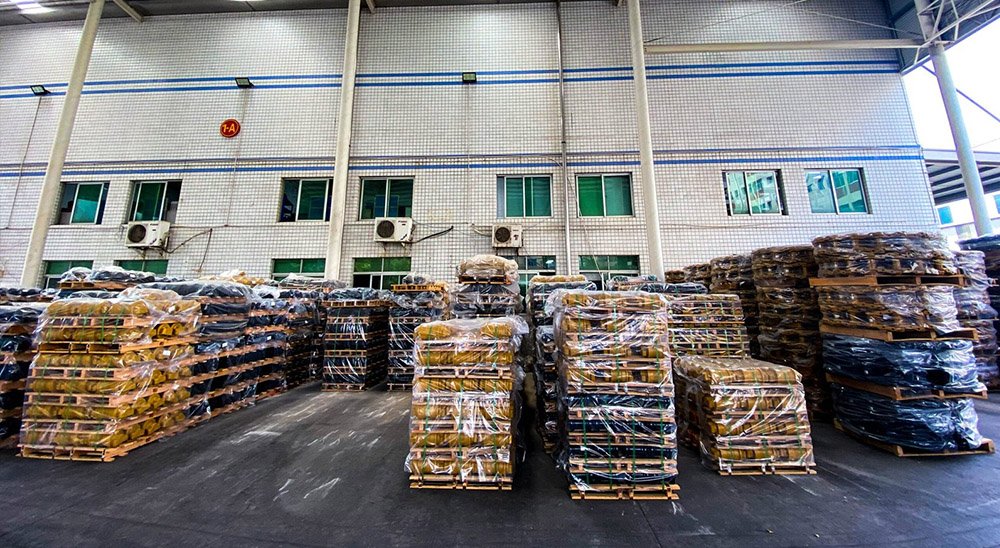
GFM has been focusing on the manufacturing of excavator and bulldozer undercarriage parts since 2011. With 15 years of professional experience and advanced production equipment, GFM has become a trusted track shoe manufacturers and parts supplier in the industry.
- Extensive Product Line and Market Coverage: GFM’s products cover critical undercarriage components, including carrier rollers, idler wheels, guide rollers, sprockets, track shoes, track chains, track assemblies, as well as bolts, nuts, pins, bushings, and bucket teeth, meeting the needs of various working environments and machine models.
Their parts are compatible with mainstream brands such as Komatsu, Hitachi, Caterpillar, Volvo, Kobelco, Doosan, Hyundai, Kubota, Sany, LiuGong, XCMG, Shantui, covering the majority of the construction machinery market. - Advanced Manufacturing and Quality Control: GFM selects high-quality raw materials, combining casting, forging, and comprehensive heat treatment processes to ensure parts remain durable under high-intensity working conditions. Each component undergoes strict quality and torque testing to ensure bolts, nuts, and track shoes meet or exceed industry standards.
The factory is equipped with automated machinery and professional inspection tools, efficiently handling large-volume orders while ensuring part accuracy and consistency. - Reliability and Customer Assurance: GFM provides a minimum one-year or 2000-hour quality guarantee, ensuring each part maintains high performance in practical operation. With sufficient inventory and fast delivery, the company can promptly meet domestic and international client demands.GFM also offers professional technical support and after-sales service, ensuring customers receive reliable solutions when selecting track shoe bolts and nuts or track shoes.
- Strict Production Monitoring and Data Tracking: Each batch of parts is fully monitored throughout production, from raw material intake, forging, heat treatment to final inspection, with detailed data records. Data tracking ensures product quality is traceable, enhancing customer trust and long-term collaboration value.
- Long-Term Cooperation and Global Customer Recognition: GFM parts are widely used in domestic and international construction machinery markets. Long-term cooperation with construction companies shows that equipment downtime decreases significantly and maintenance costs reduce by approximately 20%, demonstrating practical value and reliability.
Maintenance and common problems of track shoes and sprocket bolts
Maintenance of Track Shoes and Sprocket Bolts
Even with high-quality parts, daily maintenance is crucial. Proper maintenance can extend part life and reduce equipment downtime risks:
- Maintenance Frequency and Inspection Steps: Inspect bolts every 500 hours or monthly. Check track shoe surfaces for cracks, deformation, or abnormal wear. Use a torque wrench to check bolt tightness, and tighten immediately if loose.
- Methods to Prevent Bolt Loosening and Cracking: Bolts should be tightened evenly in a cross pattern during installation to avoid uneven stress on track shoes. Use anti-loosening washers or bolt locking compound if necessary. In high-temperature or humid environments, regularly apply anti-corrosion lubricant to reduce rust and thread wear.
- Handling Track Shoe Wear and Deformation: If wear is even, adjust construction methods to reduce localized wear, such as avoiding frequent sudden stops or sharp turns. Replace track shoes immediately if wear is severe or cracks appear to avoid affecting sprocket operation and overall machine safety.
- Practical Operation Tips: Use a hardness tester to regularly check track shoe surface hardness. Use a pull gauge to monitor bolt torque, ensuring bolts stay within the recommended range. Maintain a maintenance record sheet to track part lifespan and replacement cycles, forming a traceable maintenance system.
Common Questions and Solutions
Q1: What causes bolts to fall off?
A1: Bolts falling off is usually caused by improper installation order, insufficient torque, or using low-quality bolts. The solution is to use original bolts, tighten evenly in a cross pattern, and regularly check bolt tightness.
Q2: Why is track shoe wear uneven?
A2: Uneven wear may result from unbalanced load, harsh working conditions, or incompatible track shoe material. This can be improved by selecting high wear-resistant track shoes suitable for the environment and adjusting operation methods (avoiding sudden stops or sharp turns).
Q3: What if the bolt and sprocket interface is not properly lubricated?
A3: If bolts remain dry for long periods or are contaminated with dust or mud, they may rust or become hard to turn. It is recommended to regularly clean bolts and track interfaces and apply anti-rust oil or lubricant for smooth operation.
| Get a quick free quote | Email: henry@gfmparts.com | Whatsapp: +86 17705953659 |
Track shoes and sprocket bolts are key components for the safe and efficient operation of excavators and bulldozers. By selecting high-quality parts, following professional installation steps, and performing regular maintenance, construction companies can significantly extend equipment life, reduce downtime, and improve operational efficiency.
Choosing reliable track shoe manufacturers and high-quality track shoe bolts and nuts is essential. GFM, with 15 years of professional experience, extensive product line, advanced manufacturing processes, and strict quality control, provides trustworthy track shoes and bolts solutions. Whether for standard parts or large-volume purchases, GFM ensures high quality, fast delivery, and professional after-sales service, keeping construction machinery in optimal working condition.
Take action now: choose GFM for professional technical support and high-quality parts to maintain long-term efficient operation of your machinery.