Table of contents
- Structural Design and Material Selection of Excavator Buckets
- Performance Advantages and Application Scenarios of Excavator Buckets
- Analysis of Common Wear Types and Causes of Excavator Buckets
- Daily Maintenance and Upkeep Techniques for Excavator Buckets
- Guide To Choosing High-Quality Buckets and Compatible Models
Structural Design and Material Selection of Excavator Buckets
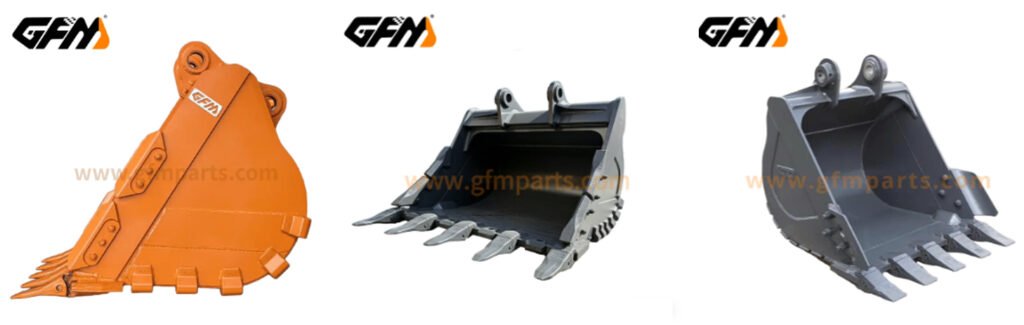
As a leading excavator bucket supplier and manufacturer, we offer a wide range of high-performance buckets to help buyers understand the importance of bucket construction and material selection.
Main structural components:
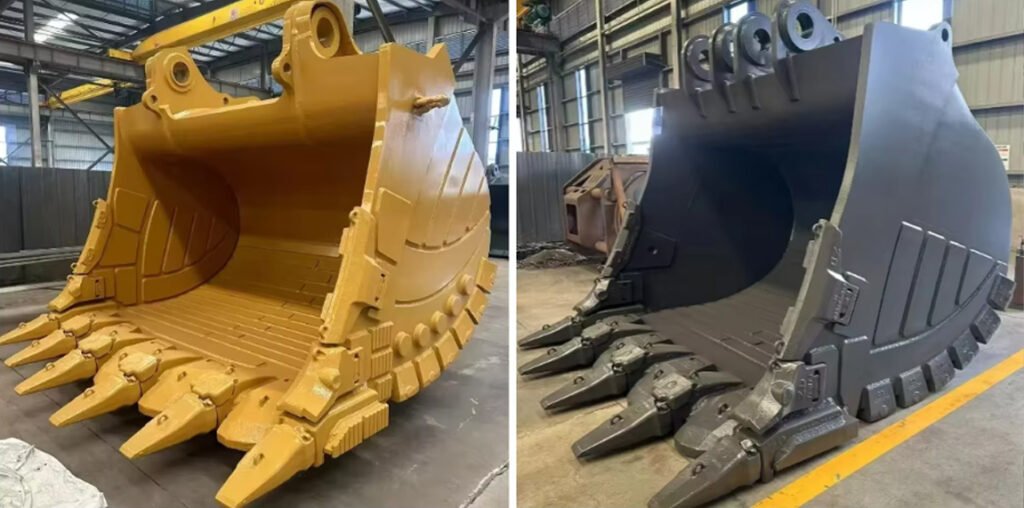
- Bucket Body: The core of the bucket, bearing the main earthmoving load. Typically made of high-strength steel with optimized thickness to ensure overall strength and wear resistance.
- Bottom Plate: Directly in contact with the ground and work materials, this is the most severely worn part. Made of NM400 or HARDOX 400/500 high-strength wear-resistant steel, its hardness is increased to 400–500 HB through heat treatment.
- Side Plate: Provides additional support and prevents deformation during operation. Usually made of the same material as the bottom plate, with its thickness optimized according to bucket capacity.
- Bucket Teeth: Directly in contact with soil, rocks, and other hard materials. Made of wear-resistant alloy steel, these are removable and replaceable, extending the bucket’s lifespan.
- Pins & Bushings: Key components connecting the bucket and the excavator arm. Made of high-strength alloy steel and precision heat-treated to ensure bucket stability and low wear during operation.
Materials and Manufacturing Process:
- High-strength Steel: NM400 and HARDOX series steel, high hardness, wear resistance, and good toughness, suitable for heavy-duty earthmoving operations.
- Heat Treatment: Quenching and tempering processes achieve a bucket body hardness of HRC 40–50, ensuring both wear resistance and resistance to brittleness.
- Surface Treatment: Sandblasting + anti-corrosion coating, oxidation-resistant and rust-proof, suitable for harsh working environments such as wet, muddy, and sandy conditions.
Design Optimization:
- Thickness Optimization: While ensuring strength, reduce material redundancy, lower weight, and improve excavator operating efficiency.
- Tooth Arrangement: Design tooth profiles and spacing according to different operational needs to improve breaking force and loading efficiency.
- Pin Matching: Ensure compatibility with excavator models, reducing wobbling and abnormal wear.
Performance Advantages and Application Scenarios of Excavator Buckets
Choosing reliable excavator bucket manufacturer ensures that the buckets maintain high performance and durability in a variety of operating environments.
Performance Advantages:
- High Wear Resistance: The bucket bottom plate and shovel teeth are made of high-strength steel, capable of withstanding impacts from hard materials such as rocks and gravel.
- Impact Resistance: Optimized design of the side plates and bottom plate allows for repeated heavy-load operations without deformation.
- High Load Capacity: The bucket capacity is matched to the bucket structure, improving single-operation efficiency and saving working time.
- Reduced Operating Costs: Wear-resistant design reduces replacement frequency and lowers maintenance costs.
Application Scenarios:
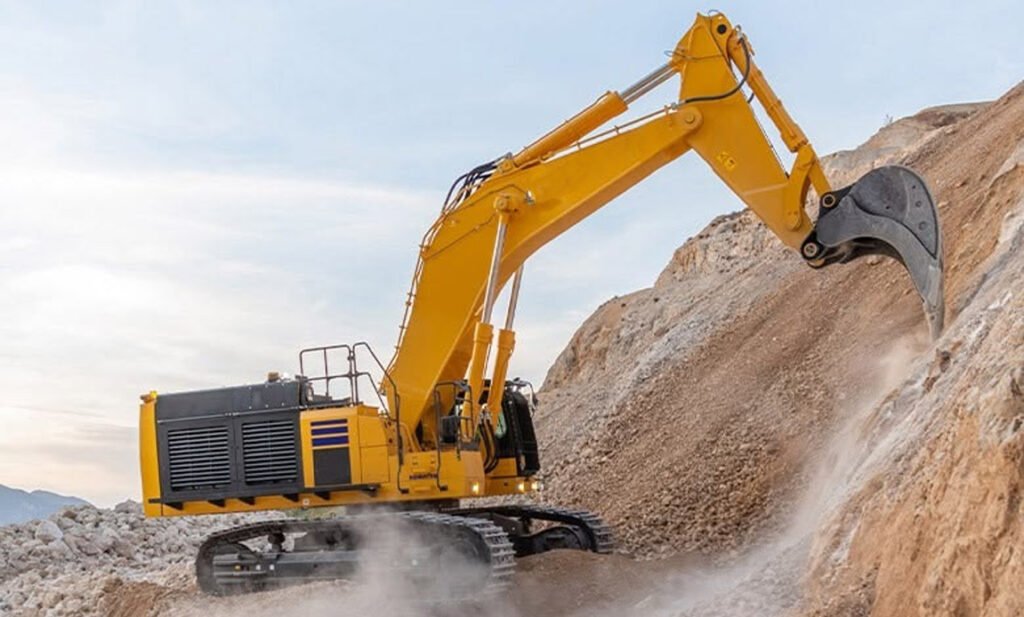
- Construction Engineering: Earthwork, gravel handling, and foundation trench excavation.
- Mining Operations: Crushing and loading ore and gravel, requiring highly wear-resistant materials and robust structures.
- Earthwork Construction: River dredging and foundation excavation, adaptable to soil, cement, and wet sand environments.
- Compatibility: Compatible with mainstream brands such as Komatsu, Caterpillar, Volvo, Doosan, and Hyundai, depending on bucket capacity and model.
Analysis of Common Wear Types and Causes of Excavator Buckets
By understanding the wear data provided by excavator bucket suppliers and manufacturers, buyers can make better selections for durable buckets.
Common wear types:
- Tooth Wear: The most easily worn part, affecting crushing force and loading efficiency.
- Bottom Plate Wear: When operating on gravel surfaces for extended periods, the bottom plate thickness decreases, potentially leading to localized cracking.
- Side Plate Wear: During bulldozing or lateral scraping, uneven stress on the side plates causes them to wear easily.
Causes of Wear:
- Operating Environment: High levels of gravel, large stones, or corrosive substances accelerate wear.
- Operating Habits: Improper operation, such as high-frequency impacts or excessive bulldozing, increases the wear rate.
- Materials and Heat Treatment: Buckets made of low-strength materials or those not adequately heat-treated are prone to rapid wear.
- Assembly Issues: Loose pins or improper installation can also lead to excessive localized wear.
Data Description:
- High-strength steel buckets (NM400/HARDOX) have a service life of 1500–2000 hours under typical construction conditions.
- The bucket teeth can be replaced individually, extending the overall bucket life by 30–40%.
Daily Maintenance and Upkeep Techniques for Excavator Buckets
Maintenance guides from professional excavator bucket suppliers can significantly extend bucket life and reduce operating costs.
- Shovel Tooth Inspection and Replacement: The shovel teeth are the parts of the excavator bucket that directly contact the ground and materials, and are also the most noticeably worn components. Daily or after each operation, the wear of the tooth tips should be checked, and the length measured to ensure it is below the manufacturer’s specified limit. Severely worn shovel teeth should be replaced promptly to ensure breaking force and loading efficiency, and to prevent bucket damage or decreased operating efficiency due to excessive tooth wear.
- Bottom Plate and Side Plate Thickness Inspection: The bottom plate and side plates are prone to wear when operating on hard surfaces such as gravel and rocks for extended periods. Use a thickness gauge to regularly measure the thickness of the bottom plate and side plates to ensure it is not below the safety limit. If localized thinning or cracks are found, they should be welded or replaced promptly to prevent uneven stress on the bucket, which could lead to breakage or deformation, thus affecting the overall service life and safety performance of the bucket.
- Pin and Bushing Maintenance: The pins and bushings connect the bucket and the excavator arm and are key components for load-bearing capacity and operational stability. Regularly check the pins for looseness or wear, and the bushings for abnormal clearance. Add lubricating oil or replace worn parts when necessary to ensure the bucket operates smoothly during operation, reduce shaking and abnormal wear, and reduce overall machine maintenance costs.
- Welded Parts and Structural Inspection: Welded parts of the bucket are subjected to long-term stress, making them prone to cracks or fatigue damage. It is recommended to visually inspect welds weekly or monthly. If cracks, porosity, or weld spalling are found, they should be repaired or reinforced immediately. Maintaining the integrity of welded parts effectively prevents bucket cracking or breakage, extends the overall service life of the bucket, and improves operational safety.
- Cleaning and Routine Maintenance: After operation, promptly clean mud, sand, stones, and other debris from the bucket, especially the bottom plate, teeth, and pins. Cleaning prevents material corrosion, water accumulation, and increased uneven wear. Combined with regular lubrication of pins and bushings, and inspection of worn parts, this ensures the bucket maintains high efficiency over the long term, reduces unexpected downtime, and improves operational continuity.
Guide To Choosing High-Quality Buckets and Compatible Models
Choosing a professional excavator bucket manufacturer is key to ensuring bucket performance and lifespan.
Selection Guide:
- Quality Guarantee: High-quality buckets come with a ≥1-year or 2000-hour quality guarantee.
- Customization Options: Choose bucket capacity, tooth type, and material according to your construction needs.
- Compatible Models: Compatible with mainstream brands such as Komatsu, Caterpillar, Volvo, Hitachi, Doosan, Hyundai, XCMG, Sany, etc.
- Procurement and After-Sales Service: Choose manufacturers with a comprehensive after-sales system to ensure timely spare parts supply and technical support.
GFM Factory:
- Extensive Manufacturing Experience: Since its establishment in 2011, GFM has focused on the production and manufacturing of excavator and bulldozer parts, accumulating over 13 years of professional experience. Years of practice have enabled the factory to deeply understand the performance requirements of various buckets and undercarriage components under different working conditions, thus providing efficient and durable product solutions.
- Advanced Production Equipment: The factory possesses modern casting, forging, machining, and heat treatment equipment, capable of producing high-precision, high-strength buckets and accessories. Through precision machining and automated testing, every product is guaranteed to meet or exceed industry standards in terms of dimensions, tolerances, and hardness.
- Comprehensive Quality Control System: GFM has established a rigorous quality management system, including raw material inspection, production process monitoring, heat treatment testing, and final factory inspection. Every bucket and part undergoes hardness testing, ultrasonic flaw detection, and abrasion resistance testing to ensure customers receive highly reliable products.
- Compatibility and Global Market Coverage: GFM’s products are compatible with many mainstream excavator and bulldozer brands, including Komatsu, Caterpillar, Volvo, Hitachi, Doosan, Hyundai, XCMG, Sany, and LiuGong. Stable production quality and on-time delivery capabilities have enabled GFM products to be sold widely both domestically and internationally, earning customer trust.
- Material and Process Advantages: GFM selects high-strength, wear-resistant steel, combining heat treatment and surface anti-corrosion processes to enhance the hardness and toughness of the bucket. Each component undergoes heat treatment hardness testing and wear resistance evaluation to ensure long-term durability under high-intensity working conditions such as mining, construction, or earthmoving operations.
By understanding the structural design, material selection, performance advantages, wear causes, and maintenance methods of excavator buckets, buyers can make more informed choices regarding excavator bucket suppliers and manufacturers. Selecting high-quality buckets not only improves work efficiency but also reduces operating costs.
| Get a quick free quote | Email: henry@gfmparts.com | Whatsapp: +86 17705953659 |
Contact us for more information to make your projects more efficient and reliable!